Showing posts with label IAAW20. Show all posts

Friday, October 1, 2021

African Folktales at Internet Archive: Hero with an African Face

Finishing up this week of epics from Africa, I saved my favorite for last: The Hero with an African Face: Mythic Wisdom of Traditional Africa by Clyde Ford, and this wonderful book is just a click away at the Internet Archive.


The books I shared earlier this week were focused on the preservation of epic tradition and performance in Africa, but this book goes in a different direction: it is a book of loving interpretation of the epic stories, and within an American, and specifically African American, context. If you have never read this book, read it. The stories that Ford presents, the way that he tells them, and the interpretations that he offers are both brilliant and inspiring. 

As Clyde explains, he reads a story three different ways, layer by layer: the story itself, then looking for the story's mythic dimensions, and then looking for the meaning of the story in the context of human life and his own life experience. It's a powerful strategy, and I especially like the way that Ford presents the stories of the epic heroes in segments, helping readers to pause, reflect, and engage with the story episode by episode. We need books like this for all the mythologies of the world, and we are especially fortunate to have a book like this available for African myths.

In terms of life and life experience, Ford has also published a memoir: Think Black. This book is not available at Internet Archive (yet!), but you can find out more about that book and about Clyde Ford at the publisher's website:


You can also find out more at Clyde Ford's own website: ClydeFord.com. Plus you can listen to Ford talking about the book here at the Town Hall Seattle: Science series.


Clyde Ford is an amazing thinker and writer, and I would urge everyone to read his books: highly HIGHLY recommended!

by Clyde Ford


Thursday, September 30, 2021

African Folktales at Internet Archive: Kebra Nagast

For today's epic post (see all this week's epic posts on one page), I'm going to shift back in time with the great national epic of Ethiopia, composed in written form in the 14th century: here's the Kebra Nagast, translated by E. A. Wallis Budge, just a click away at Internet Archive. The full title gives you a sense of what this amazing book is about: The Queen of Sheba and her only son Menyelek; being the history of the departure of God and His Ark of the covenant from Jerusalem to Ethiopia, and the establishment of the religion of the Hebrews and the Solomonic line of kings in that country.


Because this translation is in the public domain, it's available at a variety of online libraries, in addition to Internet Archive; here's a chapter-by-chapter list of links to the Sacred Texts online publication. You can find out more at Wikipedia, and also at this information page for Columbia's World Epics: Kebra Nagast. 

Another useful book about this tradition is by Enno Littmann (whom you might remember from this earlier post: Tales, Customs, Names, and Dirges of the Tigre Tribe); this book focuses on the Queen of Sheba portion of the story: The Legend of the Queen of Sheba in the Tradition of Axum, also just a click away at Internet Archive; the "Axum" of the title refers to the ancient Kingdom of Axum (Aksum) in what is today Eritrea and northern Ethiopia. 


And here are two more books that might be of interest on this topic, both available online; Post Wheeler's book is at Internet Archive, while Bessie van Vorst's book is at Hathi Trust.

by Post Wheeler


by Bessie van Vorst


So, plunge into this wealth of epic storytelling from Ethiopia; some great books await you online!

by E. A. Wallis Budge


by Enno Littmann


Wednesday, September 29, 2021

African Folktales at Internet Archive: Kelefaa Saane / Ngoni

I've focused so far this week on the Sunjata epic and the Mwindo epic, and today I've got different epic books I wanted to share. The first is The Epic of Kelefaa Saane performed by Sirifo Camara, just a click away at the Internet Archive!


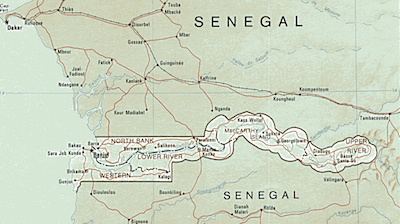
This is a Mandinka epic, and the story of "Kelefaa baa," "Kelefa the Great," is an integral part of the griot tradition in the Senegambian region. The version presented here is a transcription of a performance by the griot Sirifo Camara as recorded in Dakar, Senegal in 1987, a performance that lasted about three hours. This book contains the transcription and a translation into English by Sana Camara. You can find out more about the Mandinka language at Wikipedia. Here is a map showing Senegal and Gambia:


The other book that I want to share is another contribution by Harold Courlander (see all of Courlander's books at this blog on a single page): The Heart of the Ngoni: Heroes of the African Kingdom of Segu by Harold Courlander and Ousmane Sako.


This book is a collection of heroic traditions from the Bambara people of West Africa; the Bambara language and Mandinka language are both members of the Mande family. Today, most Bambara people live in Mali, but they also live in  Guinea, Senegal, Burkina Faso, Niger, Ivory Coast, Mauritania, and Gambia. You can find out more at Wikipedia. This map appears in the book (so Burkina Faso is still labeled Upper Volta here):


The "ngoni" of the title of the book is a musical instrument used by the jeli, the singer-historians who preserve the stories of the ancestors (more about the words griot and jeli). This photo shows Bassekou Kouyate, a musician from Mali, performing on a ngoni:


Although books like these cannot convey the performance of the singers, they are a way to learn about these heroic characters and their adventures, and both books await you at the Internet Archive.

translated by Sana Camara


by Harold Courlander and Ousmane Sako


Tuesday, September 28, 2021

African Folktales at Internet Archive: Mwindo Epic

After focusing on the Sunjata epic yesterday, I'm switching over to an another epic tradition today with this book at Internet Archive: The Mwindo Epic from the Banyanga (Congo Republic) translated by Daniel Biebuyck and Kahombo C. Mateene:


The performances of the epic on which the book is based date back to the 1950s and 1960s (the book was first published in 1969); you can read all about the fieldwork behind this project in the introduction. The book contains both the Nyanga text and the English translation! You can find out more about the Nyanga people at Wikipedia, and the book's introduction also contains valuable background information about the Nyanga people and about the Mwindo epic, plus there is also a summary of the epic story at Wikipedia.

For another version of the Mwindo story, there's actually a Crash Course video! (I love Crash Course.)


Te Mwindo epic is included in Harold Courlander's anthology of African literature, which is also at Internet Archive:  A Treasury of African Folklore.


And you can also find the Mwindo epic in Roger Abrahams's anthology at Internet Archive also: African Folktales: Traditional Stories of the Black World.


Finally if you're curious about the book cover image, that is Mr. Candi Rureke performing the Mwindo Epic, with a chorus of singers. he's holding a rattle in one hand and a conga-scepter in the other, which are identified with Mwindo and his magical powers! 

translated by Daniel Biebuyck and Kahombo C. Mateene


Monday, September 27, 2021

African Folktales at Internet Archive: Sunjata

In yesterday's blog post about African epics, I mentioned that the Sunjata epic is the most published in English, and in today's post I want to share four more Sunjata resources that are just a click away at Internet Archive; here they are:

This first book is the latest Penguin edition of the Sunjata epic in English: Sunjata: Gambian Versions of the Mande Epic, including one version by Bamba Suso and and another version by Banna Kanute, both translated by Gordon Innes. This book was originally published as Sunjata: Three Mandinka Versions, and then reissued with an introduction and additional material by Penguin Classics in 1999.


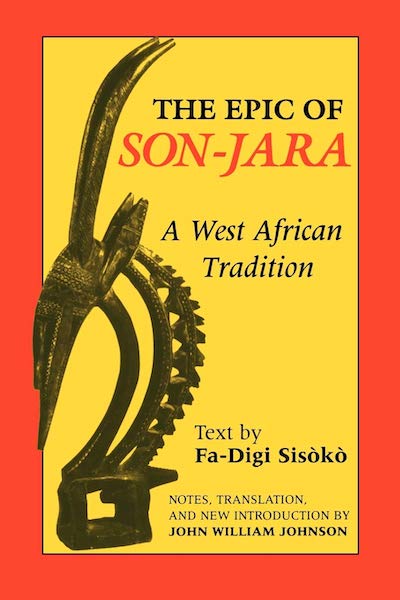
The second book is The Epic of Son-Jara: A West African Tradition by John William Johnson, which provides a translation of the griot Fa-Digi Sisoko's version of the story. (John William Johnson is one of the editors of the University of Indiana Press's "African Epic Series").


The third book is In Search of Sunjata: The Mande Oral Epic as History, Literature and Performance edited by Ralph A. Austen. Rather than presenting the text of the epic, this is a collection of essays. including some essays of great general interest like David Conrad's "Mooning Armies and Mothering Heroes: Female Power in the Mande Epic Tradition."


Finally, here is another comic book version of the story: Sunjata, Warrior King of Mali: A West African Legend by Justine Fontes (and see also the comic book version by Will Eisner in yesterday's blog post). 


So, there you go: a wealth of resources at Internet Archive to learn about the many different versions of this African epic, all just a click away. And I'll be back tomorrow with a post about the Mwindo epic!


Sunday, September 26, 2021

African Folktales at Internet Archive: Epic Traditions of Africa / Sundiata

For Week 20, I was planning to look at books that bring together different regions of Africa, and then when I picked out this first book, I realized I should do a week about African epics. So, here's the ideal place to start: Epic Traditions of Africa by Stephen Belcher just a click away at Internet Archive.


This book is a perfect introduction to the study of this topic, which is one of the most fascinating African storytelling traditions. The book is organized into the following chapters: Elements of Epic Traditions, Epics of Central Africa, Hunters' Traditions and Epics, Traditions of the Soninke, Sunjata and the Traditions of the Manden, Segou and the Bamana, Traditions of the Fula, and Emergent Traditions. 

There is also an extremely useful list of "Published Epic Texts" in an appendix, which reviews all the published editions, not just in English, of the epics referred to in the book: Lianja, Mwindo, Jeki, Ozidi, Wagadu, Sunjata (by far the most widely published), Hambodedio, Samba Gueladio, and more. It's organized chapter by chapter so that as you read the book, you can then take a look and see what texts are available for the epics in that chapter. You are in luck if you can read French because much of the most important work on the epics has been published in French, but you will also find lots of material in English also. 

To take one example, you might decide that you want to read the story of Sunjata (Sundiata)... and the Internet Archive is ready to help with Sundiata, An Epic of Old Mali, which is D. T. Niane's version based on a telling by the Djeli (griot) Mamoudou Kouyate, and now translated into English by G. D. Pickett.


You can find out more about the 13th-century king Sundiata and also about the epic at Wikipedia. 

And for a less traditional approach, there is a comic book version by the great Will Eisner, also available at Internet Archive: Sundiata, A Legend of Africa.


Eisner takes the storytelling perspective of "The Great Grey Rock" who is part of Sundiata's story.


Here's a page to give you a sense of how Eisner works with the graphic form to tell the story:


This book was published late in Eisner's life; he was in his 80s when the book came out in 2003, and he died in 2005. I think it is fascinating that he turned to the topic of African epic for one of his final works. You can read more about Eisner's remarkable life and career at Wikipedia. Not surprisingly, the Internet Archive abounds with books by and about Will Eisner: Eisner at Internet Archive.

Of course, Sundiata is just one of many African epics, and you can use Belcher's book to learn more and see if there is some African epic story you want to explore, and I'll use this blog to write about some more African epic stories this week.

by Stephen Belcher


translated by G. D. Pickett.


by Will Eisner