Showing posts with label Author: Lester. Show all posts

Saturday, July 23, 2022

ABC 12. How Many Spots Does a Leopard Have?

I can't believe we're already wrapping up the third month of Anansi Book Club! You can find out more at the website: Anansi Book Club. At the end of each month, there's a longer book to read with multiple stories, and the longer book this month is by one of my very favorite authors: Julius Lester! Here's the book: How Many Spots Does a Leopard Have? ... it's available for borrowing from the Internet Archive, just a click away, thanks to the power of Controlled Digital Lending.


In this book, first published in 1989, Julius Lester drew on both African and on Jewish sources for the stories, which reflects his own fascinating life journey. Upon learning that his great-grandfather was a Jewish man who had married a freed slave, Lester began learning about Judaism, and in 1982 he converted. You can read more about this at Wikipedia, and here: Iconic Black Jewish Writer Julius Lester Should Be on Every Parent’s Radar.

So, in this book, Lester has told 9 African stories, 2 Jewish stories, and also a story in which he combines African and Jewish folktales into a new story of his own invention. He provides notes and bibliography for his sources in the back of the book, and you can find most of his sources at the Internet Archive.

The illustrations are by David Shannon; here's his illustration for the story of Leopard, which is a Rabbit story too; if you look, you'll see Rabbit there too:


"How Many Spots Does a Leopard Have?" is a Ngoni story from southeastern Africa. Lester based his version of the story on a story in Geraldine Elliot's The Long Grass Whispers, which you can also read at the Internet Archive: The Number of Spots. The illustrations for that book are by Sheila Hawkins:


One of the west African stories that Lester includes is "Why the Sun and Moon Live in the Sky," based on a version in Paul Radin's African Folktales, which you can read at the Internet Archive also. Here is Shannon's illustration for this delightful story:


You might remember this story from another children's book: Why the Sun and the Moon Live in the Sky illustrated by Blair Lent. Here's how he drew Sun and Moon:


Another one of the stories that Lester includes is a trickster tale type found in many versions throughout Africa: The Tug-of-War. In Lester's version, the Elephant and the Hippopotamus are the dupe of Turtle's trick, pulling against each other. Here's how David Shannon depicts the boastful Turtle: Tug-of-War.


This tug-of-war type of story also shows up in the Americas; for example, here is a version with the Rabbit as trickster playing Whale against Elephant in a Gullah story in Bo Rabbit Smart for True.


Lester also retells "The Bird That Made Milk," a Xhosa story from southern Africa. There are many different versions of this story, and the one that Lester is working with here has a "monster who eats children" motif that is blended in with the story of the supernatural bird. 

You can read Lester's source here in Radin's African Folktales: The Bird Who Made Milk. For a different version of the story, here's a story from an Ndebele storyteller in Zimbabwe that you can read in Alexander McCall Smith's The Girl Who Married a Lion: Milk Bird.

These are the other African stories in Lester's book: "The Monster Who Swallowed Everything," is a Basuto story from southern Africa;  "The Town Where Snoring Was Not Allowed" is a Mende story from western Africa; "The Town Where Sleeping Was Not Allowed" is a Hausa story from western Africa; "The Woman and the Tree Children" is a Maasai story from eastern Africa; "Why Monkeys Live in Trees" is another Ngoni story from southeastern Africa; and "What Is the Most Important Part of the Body?" is a Mano story from Liberia, combined with a traditional Jewish legend.

You can find various Julius Lester videos at YouTube, and I picked out this one because here Lester is talking about the close relationship he had with illustrator Jerry Pinkney:


I've blogged before about Lester and Pinkney's work together, most notably in their monumental retelling of the Brer Rabbit stories collected by Joel Chandler Harris: The Complete Tales.


They also did a version of John Henry together:


You can read more about Julius Lester at Wikipedia, and I'll finish up this week by mentioning some of the other Julius Lester books I have written about at this blog: 

(illustrated by Tom Feelings; more by Tom Feelings)


(illustrated by Ralph Pinto)


Meanwhile, Lester's versions of these African stories await you, just a click away at the Internet Archive:

Wednesday, June 8, 2022

African Diaspora at Internet Archive: Two Rabbit Books

Anansi has been getting a lot of attention here lately, so I wanted to do some Rabbit today, featuring two children's books by authors very familiar to readers of this blog: Julius Lester and Virginia Hamilton.

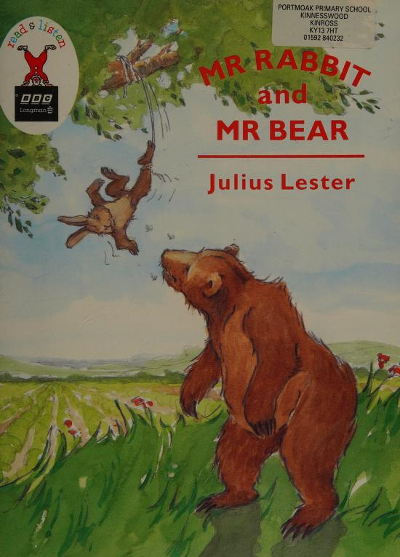
Here's the Julius Lester book: Mr. Rabbit and Mr. Bear.


Follow this link for more books by Julius Lester!

The illustrations are by Elsa Godfrey. As you can see, this is the famous story of how Brer Rabbit tricked a girl into letting him into her father's garden so he could eat all the lettuce. (And yes, Mr. Bear will have an important role to play in the story too!)


And here's the Virginia Hamilton book: Bruh Rabbit and the Tar-Baby Girl, an even more famous Rabbit story. 


Follow this link for more books by Virginia Hamilton!

The illustrations are by James Ransome, one of my favorite illustrators! Here's the rabbit all tangled up on the tar-baby girl:


You might remember Ransome from this book of stories from the southern U.S. as told by J. J. Reneaux: How Animals Saved the People: Animal Tales from the South. 


We can never get too many rabbit stories; enjoy!


by Julius Lester


by Virginia Hamilton


Wednesday, April 13, 2022

African Diaspora at Internet Archive: Knee-High Man

After writing about Julius Lester's Black Folktales yesterday, I wanted to follow up today with another one of his books: The Knee-High Man and Other Stories.


This is a book aimed at a younger audience, and it features six different stories drawn from various sources (see Lester's note in the back of the book about the sources): What Is Trouble? ~ Why Dogs Hate Cats ~ Mr. Rabbit and Mr. Bear ~ Why the Waves Have ~ Whitecaps ~ The Farmer and the Snake ~ The Knee-High Man.

The illustrations are by Ralph Pinto. Here you can see Rabbit and Bear:


And here is the knee-high man of the book's title, getting schooled by an owl:


Plus of course I have to remind everybody that you can also access Julius Lester's masterpiece, the complete tales of Brer Rabbit ... with iillustrations by Brian Pinkney! ... at the Internet Archive too: The Complete Tales.


So, if the stories of rabbit and bear in this little book make you want to read some more animal stories, all the adventures of Brer Rabbit await you too. Enjoy!

by Julius Lester


Tuesday, April 12, 2022

African Diaspora at Internet Archive: Black Folktales

After those two books from Richard Dorson, I wanted to share another "classic" book of African American folktales: Black Folktales by the great Julius Lester.


The stories are organized by themes: ORIGINS: How God Made the Butterflies ~ Why Apes Look Like People ~ Why Men Have to Work ~ How the Snake Got His Rattles ~ LOVE: The Girl With the Large Eyes ~ The Son of Kim-Ana-u-eze and the Daughter of the Sun and the Moon ~ Jack and the Devil's Daughter ~ HEROES: High John the Conqueror ~ Stagolee ~ PEOPLE: The Old Man Who Wouldn't Take Advice ~ People Who Could Fly ~ Keep on Stepping.

You might have already guessed from the cover that the illustrations are by the brilliant artist Tom Feelings! Here's his illustration for the story of God and the Snake:


And here's an illustration from the famous legend of the flying Africans:


You might remember Tom Feelings' work from this earlier post which featured two books of African folktales with his illustrations: When the Stones Were Soft by Eleanor Heady and Tales of Temba by Kathleen Arnott.


And of course this is not the first time I've written about Julius Lester before; back in May when I first started this project, I featured this book by Julius Lester: How Many Spots Does a Leopard Have?


And I'll be back with more from Julius Lester tomorrow! Meanwhile, enjoy this classic collection of African American folktales, and the illustrations too!

by Julius Lester


Wednesday, February 2, 2022

African Diaspora at Internet Archive: John Henry

After writing about Julius Lester and Jerry Pinkney's amazing Brer Rabbit books yesterday, I wanted to follow up with another book they collaborated on: John Henry, which is just a click away at the Internet Archive.


I'll have more to say in future posts about John Henry, since he is a fundamental figure in African American folklore and specifically in the ballad tradition. There is an introduction with some historical context, but the focus of this retelling is the legendary John Henry of the ballad tradition who begins life as a supernatural hero; there's even a unicorn that comes with the other wild animals to witness the birth of this super-strong child. 


Pinkney's illustrations are brilliant, and Lester's writing is, as always, a complete pleasure to read, full of orality. 

Lester also includes the legend of John Henry being able to outrun a horse before getting to the core legend of John Henry driving steel, racing against the machine. 


In the preface, Lester writes about an early conversation he and Pinkney had about the project, and how that got him to thinking about Martin Luther King. That's a profound thought to have in mind as the story concludes: "Dying isn't important. Everybody does that. What matters is how well you do your living."


I'll have more to say about the John Henry ballad tradition later on (there are some fabulous African American song books at the Internet Archive)... meanwhile, if you want to spend some time with Julius Lester and Jerry Pinkney today, this beautiful book is a fine way to do that, and it's just a click away, thanks to the power of Controlled Digital Lending at the Archive.


by Julius Lester


Tuesday, February 1, 2022

African Diaspora at Internet Archive: Julius Lester / Uncle Remus

I'm so excited about this post for the first day of Black History Month, 2022! Today's book is Julius Lester's version of the Brer Rabbit and other African American folktales collected and retold by Joel Chandler Harris — and yes, I'll have lots to say about Joel Chandler Harris in future posts... but today, a much happier topic: Julius Lester! This is the book that got me started on on my own African and African American folktale project, and I was so glad (SO GLAD) to discover that there is a copy available at the Internet Archive.

In this version of the Brer Rabbit stories, Julius Lester has removed the awful Uncle Remus framework, and he's also replaced Harris's patronizing eye-dialect with something more idiomatic and absolutely fun to read. So, if you've never read Brer Rabbit, or if you gave up on the Joel Chandler Harris versions, this is the book for you, just a click away at the Internet Archive: Uncle Remus: The Complete Tales by Julius Lester.


Even better, the book is illustrated by Jerry Pinkney. There are beautiful full-color two-page spreads, and also an abundance of black-and white drawings.


A key feature of Pinkney's illustrations is that the human characters are depicted as African Americans, in sharp contrast to earlier illustrations for Harris's books which depicted Mr. Man and Miss Meadows and the gals et al. as white. So, for example, here's the scene where Mr. Man and his daughter have trapped Brer Rabbit in the garden:


And here's a scene with Brer Rabbit and one of the Miss Meadows's gals:


You might remember both Julius Lester and Jerry Pinkney from previous posts about African folktale books — Julius Lester and Jerry Pinkney — and I'll have be writing about more books from both Lester and Pinkney in future posts about African American folktale books.

This big Brer Rabbit book is a compendium of four earlier books that Lester and Pinkney published, three of which are available at Internet Archive too. An odd thing about the book is that the pagination does not run from the start of the book to the finish; instead, the pagination starts follows the original four books, with each book starting again at p. 1. Below I've listed the titles of each of the individual books, and then links to the stories from that book inside the "Complete Tales" edition:

The Adventures of Brer Rabbit. How the Animals Came to Earth / How Brer Fox and Brer Dog Became Enemies / Hold 'im Down, Brer Fox / Brer Rabbit Comes to Dinner / Brer Rabbit and the Tar Baby / Brer Rabbit Gets Even / Brer Rabbit and Sister Cow / Brer Turtle, Brer Rabbit, and Brer Fox / Brer Wolf Tries to Catch Brer Rabbit / Brer Rabbit Finally Gets Beaten / Mr. Jack Sparrow Meets His End / Brer Rabbit Gets Caught One More Time / The Death of Brer Wolf / Brer Fox and Brer Rabbit Go Hunting / Brer Rabbit Tricks Brer Fox Again / Brer Rabbit Eats the Butter / Brer Rabbit Saves His Meat / Brer Rabbit's Children / The Death of Brer Fox / Brer Rabbit and Brer Lion / Brer Rabbit Takes Care of Brer Tiger / Brer Lion Meets the Creature / The Talking House / Brer Rabbit Gets Beaten Again / Brer Rabbit Tricks Brer Bear / The End of Brer Bear / Brer Fox Gets Tricked Again / Brer Rabbit and the Little Girl / Brer Rabbit Goes Back to Mr. Man's Garden / Brer Possum Hears the Singing / Brer Rabbit's Riddle / The Moon in the Pond / Why Brer Bear Has No Tail / Wiley Wolf and Riley Rabbit / Brer Rabbit Gets the Money / The Cradle Didn't Rock / Brer Rabbit to the Rescue / The Noise in the Woods / Brer Rabbit Gets the Meat Again / Brer Wolf Gets in More Trouble / Brer Rabbit Tells on Brer Wolf / Brer Rabbit and the Mosquitoes / How Brer Rabbit Became a Scary Monster / Brer Fox, Brer Rabbit, and King Deer's Daughter / Brer Rabbit Breaks Up the Party / Brer Rabbit Outwits Mr. Man / Brer Wolf, Brer Fox, and the Little Rabbits / Brer Rabbit's Luck


More Tales of Uncle Remus. Brer Rabbit Gets Brer Fox's Dinner / Brer Rabbit and Brer Fox Kill a Cow / Brer Fox and the Grapes / Brer Rabbit Falls in Love / The Ol' African Helps Out / The Courting Contest / Brer Rabbit, Brer Coon, and the Frogs / Brer Rabbit's Laughing Place / Brer Rabbit Gets the House to Himself / Miz Partridge Tricks Brer Rabbit / The Famine / Brer Rabbit, Brer Bear, and the Honey / Brer Snake Catches Brer Wolf / Brer Rabbit Gets the Meat / Brer Rabbit Scares Everybody / Grinny Granny Wolf / The Fire Test / Brer Rabbit Catches Wattle Weasel / Brer Rabbit and Mr. Man's Chickens / The Barbecue / Brer Alligator Learns About Trouble / Brer Fox Gets Tricked Again / Brer Rabbit and Brer Bullfrog / Brer Rabbit Meets Up With Cousin Wildcat / Brer Rabbit Gets a Little Comeuppance / Brer Rabbit Advises Brer Lion / Brer Rabbit's Money Mint / Brer Rabbit Makes a Deal With Mr. Man / Brer Rabbit Doctors Brer Fox's Burns / Brer Fox Sets a Fire / Brer Rabbit Builds a Tower / Brer Rabbit Saves Brer Wolf - Maybe / Mammy-Bammy Big-Money Takes Care of Brer Wolf / Brer Rabbit and the Gizzard Eater / Why Dogs Are Always Sniffing / Being Fashionable Ain't Always Healthy / The Race


Further Tales of Uncle Remus. Brer Fox and Mr. Man / King Lion and Mr. Man / Brer Fox and Brer Turtle / Brer Fox Gets Tricked by the Frogs / Brer Bear Gets Tricked by Brer Frog / Brer Bear, Brer Turtle, and the Rope-pulling Contest / Brer Turtle Takes Care of Brer Buzzard / Brer Fox Wants to Make Music / The Pimmerly Plum / Brer Turtle Takes Flying Lessons / Brer Buzzard and Brer Hawk / Brer Buzzard Bites the Dust - Again / The Wise Bird and the Foolish Bird / The Most Beautiful Bird in the World Contest / Brer Fox and Uncle Mud Turtle / The Creature With No Claws / Brer Polecat Finds a Winter Home / Brer Bear and Brer Rabbit Take Care of Brer Fox and Brer Wolf / Brer Fox Gets Away for Once / Taily-po / Brer Rabbit, Brer Fox, and the Chickens / Brer Fox Tries to Get Revenge / Brer Wolf and the Pigs / Mr. Benjamin Ram and His Wonderful Fiddle / Mr. Benjamin Ram Triumphs Again / How the Bear Nursed the Alligators / Brer Turtle and Brer Mink / Brer Billy Goat Tricks Brer Wolf / Brer Fox Takes Miz Cricket to Dinner / Miz Cricket Makes the Creatures Run / The Story of the Doodang / Brer Deer and King Sun's Daughter / Teenchy-tiny Duck's Magical Satchel


The Last Tales of Uncle Remus. Why the Cricket Has Elbows on His Legs / Why the Earth Is Mostly Water / The Origin of the Ocean / Brer Rabbit and Miss Nancy / The Old King and the New King / Brer Bear Comes to the Community / The Snake / A Ghost Story / Brer Bear Exposes Brer Rabbit / Brer Rabbit Teaches Brer Bear to Comb His Hair / Why Brer Possum Has No Hair on His Tail / Why Brer Possum Loves Peace / The Baby Who Loved Pumpkins / Impty-umpty and the Blacksmith / The Angry Woman / Brer Rabbit Throws a Party / Why Brer Fox's Legs Are Black / How the Witch Was Caught / Why Dogs Are Tame / How Tinktum Tidy Recruited an Army for the King / Why Guinea Fowls Are Speckled / Why the Guineas Stay Awake / Brer Fox and the White Grapes / Why the Hawk Likes to Eat Chickens / The Little Boy and His Dogs / The Man and the Wild Cattle / Cutta Cord-la / Why Brer Bull Growls and Grumbles / Brer Rabbit, King Polecat, and the Gingercakes / The Fool / How Brer Lion Lost His Hair / The Man and the Boots / Why the Goat Has a Short Tail / Brer Buzzard and Brer Crow / The Blacksmith and the Devil / Why Chickens Scratch in the Dirt / Brer Rabbit and Aunt Nancy / The Adventures of Simon and Susanna

In future posts, I'll have lots more to say about these stories and the Joel Chandler Harris publications that Lester used as his source, but for now I'll just say: ENJOY. Especially if you have never read the Brer Rabbit stories before, there is no better place to start than with Julius Lester and Jerry Pinkney's version, and it's waiting for you at the Internet Archive.

by Julius Lester


Monday, May 17, 2021

African Folktales at Internet Archive: How Many Spots Does a Leopard Have?

After writing about Ashley Bryan yesterday, I knew I wanted to write about another remarkable African American children's author today: Julius Lester. He is the author of the astounding (I mean: ASTOUNDING) Brer Rabbit books illustrated by Jerry Pinkney (I will have lots to say about those books in the future!)... but today I want to write about Lester's collection of African folktales called How Many Spots Does a Leopard Have? ... it's available for borrowing from the Internet Archive, just a click away!

In this book, first published in 1989, Julius Lester drew on both African and on Jewish sources for the stories, which reflects his own fascinating life journey. Upon learning that his great-grandfather was a Jewish man who had married a freed slave, Lester began learning about Judaism, and in 1982 he converted. You can read more about this at Wikipedia, and here: Iconic Black Jewish Writer Julius Lester Should Be on Every Parent’s Radar.

So, in this book, Lester has told 9 African stories, 2 Jewish stories, and also a story in which he combines African and Jewish folktales into a new story of his own invention. He provides notes and bibliography for his sources in the back of the book. (I will profile some of the sources he used in future posts.) The illustrations are by David Shannon.

The title story of the book comes next-to-last; it is based on an Ngoni story from southern Africa that Lester found in Elliot's Long Grass Whispers, which is not available at Internet Archive but which is available at Hathi Trust (it's an excellent book also). Here's a quick summary of the story, but you should click and read Lester's version; it is perfectly charming!

Leopard was admiring his own beautiful reflection when Crocodile rose up out of the water and mocked Leopard's vanity. Leopard, however, was not fazed; instead, he asked Crocodile to please count his spots so he could know exactly how beautiful he was. Crocodile refused and plunged back into the water. Leopard was so eager to know the number of his spots that he offered a prize to the animal who could count them all. Weasel tried, but could only count to four. Elephant tried, but he after he reached ten, he had to start with one again; he muddled his way through the teens and then announced that Leopard had more than twenty spots. Bear was able to count quite high, up to thirty and beyond, but he kept interrupting himself with questions and observations along the way and had to keep starting over. Finally, Rabbit offered to solve the problem. He touched one spot and said, "This one is dark." Then another. "This one, however, is light." "Dark, light, dark, light, light, dark, dark, dark" and so on. Finally Rabbit had touched every spot on Leopard's whole body. "Two spots!" he said. "Light and dark." Leopard knew somehow that this was not right, since he was sure he had more than two spots, but no one knew how to show Rabbit was wrong. So, Rabbit won! The prize? A portrait of Leopard!


illustration by David Shannon

And of course that is just one story... go read the rest! They are just a click away, thanks to Internet Archive's digital lending library:


How Many Spots Does a Leopard Have? by Julius Lester