Showing posts with label Author: Hurston. Show all posts

Thursday, August 11, 2022

African Diaspora at Internet Archive: Go, Gator, and Muddy the Water

Following up on the Harlem Renaissance themes from yesterday (Fauset) and the day before (Brownies' Book), I wanted to share four more books of folklore by Zora Neale Hurston that you can find at the Internet Archive. The first is: Go, Gator, and Muddy the Water: Writings from the Federal Writers' Project.


This book contains writings by Zora Neale Hurston when she was part of the Federal Writers' Project, a divison of the WPA, living and working in Eatonville, Florida in 1938 and 1939. The book was published in 1999, and some of the pieces had not ever been published before. There is a helpful introductory essay by Pamela Bordelon which situates this work in the context of Hurston's other folklore research and her life generally.

Here is a list of the stories you will find here: The Little Man ~ The Big Man ~ The Ugly Man ~ The Storm Met the Hurricane ~ When the Wind Blew Hard ~ A Story from Tampa ~ Big Vegetables ~ Round Ocala ~ Planting Corn ~ Sis Snail ~ God and the Devil ~ Big John the Fortuneteller ~ When John Was in Charge ~ Daddy Mention's Escape ~ Daddy Mention and the Mule ~ Why Negroes Are Black ~ The White Man's Prayer ~ Diddy-Wah-Diddy ~ Zar ~ Beluthahatchee ~ Heaven ~ West Hell ~ Jack and the Beanstalk ~ How the Florida Land Turtle Got its Name ~ Uncle Monday ~ Roy Makes a Car.

The second book is The Sanctified Church, published in 1981, which also contains Hurston's FWP writings.


This anthology is less carefully researched, and as Bordelon points out in Go Gator, some of the materials here were not actually written by Hurston, but are instead the work of other FWP writers working in Florida at the time: the "Daddy Mention" essay here is by Martin Richardson (but see the "Daddy Mention" materials in Go, Gator above for Hurston's work on this folk figure), the "Father Abraham" essay is by J. J. Johnson, and "Cures and Beliefs" come from Viola Muse. These are valuable folklore pieces to be sure, which is why I wanted to make sure to share this book, but they are not by Hurston. So, proceed with caution... but also make sure to read and enjoy the beautiful foreword by Toni Cade Bambara!

Next, I wanted to share this anthology of Hurston's stories, focused on the supernatural: The Skull Talks Back and Other Haunting Tales.


You'll find six African American folktales here: Big, Bad Sixteen ~ Bill, the Talking Mule ~ The Skull Talks Back ~ The Witch Who Could Slip Off Her Skin ~ High Walker ~ The Haunted House. The stories are adapted by Joyce Carol Thomas, a renowned African American children's book author, but she does not provide any information about the sources or contexts of the stories. So, this is a fun book to read for getting to know the stories, but they do not provide a trail to lead you back to the sources in Hurston's publications. In addition, because Thomas has changed some of the titles ("Big Sixteen" has become "Big Bad Sixteen"), it can take some sleuthing to track down the sources in Hurston. This book would be so much more useful with a guide to where to find these stories in Hurston; if I can remember (!), I'll add a list of sources here later.

The eerie illustrations are by Leonard Jenkins:


Finally, I wanted to share the monumental (1000 pages) Library of America publication: Folklore, Memoirs, and Other Writings.


Of special interest here is the section of Selected Articles, which features some of the Federal Writers Project materials, plus essays like "High John de Conquerer" and "The Eatonville Anthology."

Plus you can see all the books by Hurston at the Archive too, including not just her folklore books but her stories and novels also. This screenshot shows just a few of the many books you will find:


And you can use this link for all the posts about Hurston's books at this blog. So much Hurston goodness awaits you at the Internet Archive, all thanks to the power of Controlled Digital Lending.


by Zora Neale Hurston


by Zora Neale Hurston


Sunday, March 6, 2022

African Diaspora at Internet Archive: Mules and Men

Last month, I wrote about Zora Neale Hurston's lost-and-found-again manuscript of African American folktales, Every Tongue Got to Confess, which was first published in 2001. Today I want to feature the remarkable book of African American folktales that Hurston published in her lifetime: Mules and Men, which was first published in 1935.


There's really no other book of American folktales quite like this one, where Hurston contextualizes all the stories, retelling her journey as a collector of stories as a story of its own, introducing us to the storytellers and the storytelling scenes. If you've never read anything by Hurston, I think this is absolutely the best book to start with. 

The first half of the book includes 70 folktales and songs, and then the second half of the book is about "hoodoo" and conjuring. Here is a list of the story titles, linked to their page at the Internet Archive's edition of the book: John and the Frog / Witness of the Johnstown Flood in Heaven / How the Brother Was Called to Preach / How the Preacher Made Them Bow Down / Pa Henry's Prayer / How the Church Came to Be Split Up / Why Negroes Are Black / Why Women Always Take Advantage of Men / Sue, Sal, and That Pretty Johnson Gal / The Quickest Trick / How to Write a Letter / A Fast Horse / Ah'll Beatcher Makin' Money / The Workinest Pill You Ever Seen / How Jack Beat the Devil / John Henry / Ole Massa and John Who Wanted to Go to Heaven / Massa and the Bear / Why the Sister in Black Works Hardest / De Reason Niggers Is Working So Hard / Deer Hunting Story / Big Talk / The First Colored Man in Massa' House / What Smelled Worse / The Fortune Teller / How the Negroes Got Their Freedom / The Turtle-watch / From Pine to Pine Mr. Pinkney / God an' De Devil in De Cemetery / Praying for Rain / Kill the White Folks / Member Youse a Nigger / You Think I'm Gointer Pay You but I Ain't / Why the Mocking Bird Is Away on Friday / Man and the Catfish / How the Snake Got Poison / How the Woodpecker Nearly Drowned the Whole World / How the Possum Lost the Hair Off His Tail / How the Gator Got His Mouth / How Brer Gator Got His Tongue Worn Out / How the Gator Got Black / How Brer Dog Lost His Beautiful Voice / What the Rabbit Learned / The Goat That Flagged a Train / Shooting Up Hill / Tall Hunting Story / The Hawk and the Buzzard / Why They Always Use Rawhide on a Mule / Why We Have Gophers / How God Made Butterflies / How the Cat Got Nine Lives / The Son Who Went to College / Why the Waves Have Whitecaps / How the Lion Met the King of the World / Sermon by Traveling Preacher / Card Game / Ella Wall / Ah'm Gointer Loose Dis Right-hand Shackle From Round My Leg / Strength Test Between Jack and the Devil / Why the Porpoise Has His Tail on Crossways / Why the Dog Hates the Cat / How the Devil Coined a Word / How Jack O'lanterns Came to Be / Why the East Coast Has Mosquitoes and Storms / How a Loving Couple Was Parted / All These Are Mine / How the Squinch Owl Came to Be / The Talking Mule / High Walker and Bloody Bones / Fight at Pine Mill.

This is the original cover of the book with the jacket blurb (click on the image for a larger view):


Other works by and about Hurston await you at the Internet Archive also, all just a click away, thanks to the power of Controlled Digital Lending! 


Mules and Men
by Zora Neale Hurston


Tuesday, February 8, 2022

African Diaspora at Internet Archive: Every Tongue Got to Confess

Yesterday I shared a book by Julian Bagley, a storyteller from Florida, which is the perfect excuse to share one of my very favorite books by one of my very favorite storytellers today: Every Tongue Got to Confess: Negro Folk-tales From the Gulf States by Zora Neale Hurston.


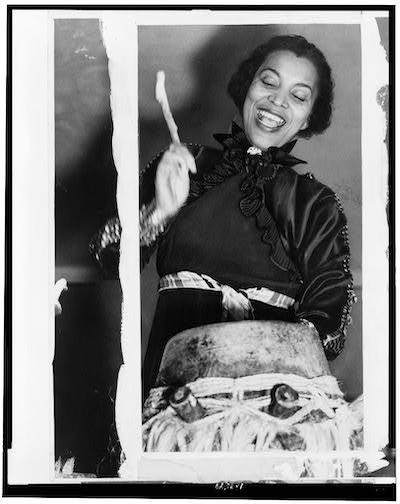
You can find out more about Hurston at Wikipedia. Here's a gorgeous photo you can find at the Library of Congress from 1937 where she is playing a drum:


This amazing book contains over 300 stories that Hurston collected in the 1920s, and it was brought back from oblivion to be published for the first time in 2001. It's an amazing story in and of itself, which you can read about in the book's introduction. The unpublished manuscript turned up at the Smithsonian in the papers of William Duncan Strong, an anthropologist at Columbia and colleague of Franz Boas, who had supported Hurston's work; Hurston had been Boas's student in the 1920s at Columbia. It seems likely that Boas had a copy of the manuscript which ended up in the files of the Anthropology department that were eventually moved into storage in the basement where Strong's papers were also stored, and the whole lot ended up being archived at the Smithsonian, where Hurston's manuscript was discovered decades later.

It is a MIRACLE.

The book also features a foreword by John Edgar Wideman with some great observations about Hurston's writing style and the whole idea of folklore and "oral literature" (more about Wideman at Wikipedia).

Here's an inventory of the stories you will find in this book linked to that specific page at the Internet Archive (some of the stories in Hurston's manuscript had titles, but most did not, so I have supplied those titles myself):


Preacher Tales. Isaac and Daphne / Gabriel's Trumpet / De Holy Ghost / The Preacher an' de Sheep's Tails / A Man and His Wife Had a Colt / Testimony / A Great Sunday-School Boy / Economical River / A Half Pint of Shinny / A Woman Always in Church / The Rooster / God Grant It! / Aunt Dinah / The Ole Preacher / Called Tuh Preach / Just Done Dat Tuh Try Yo' Faith / De Blood-Stained Banner uh Jesus Christ / Gimme Dat Ole Time Religion / Every Tongue Got to Confess / Two Deacons / Cussin' and Damnin' / Hongry Man / A Great Big Woman / Two Men Hoboing / Changing Pastors / Ole Lady Par'lyzed / The Farmer's New Ground / Man Loved Preachers / Uncle Jeff and the Church / Preacher Had a Son / Preacher in the Pulpit / Shouting and Running / All dem Words Don't Say Preach / A Little Boy Lived on a Hill / Daddy Was a Great Preacher / Two Colored Preachers / Leaving Alabama / I Been to Hell


Tall Tales. The Ugliest Man / The Meanest Man / A Man So Bad / A Man So Hungry / The Gun and the Bullet / A Nose So Big / A Man So Smart / The Fastest Man / A Man So Lazy / The Tallest Man / The Biggest Man / The Shortest Man / The Stingiest Man / The Blackest Man / The Smallest Wife / So Much Milk / A Cow So Swaybacked / The Fastest Horse / The Poorest Horse / A Mule So Poor / A Hen That Cackled So Much / The Biggest Chickens / Best Trained Mule / The Biggest Pumpkin / Sugar Cane So Large / Watermelon So Large / Biggest Apple / The Biggest Cabbage / Sweet Potato So Big / The Biggest Tree / Rich Ground / On Mississippi River / The Poorest Ground / Country So Hilly / Hard Ground / Hard Wind / It Rained So Hard / So Dry / De Darkest Night / The Hottest Day / The Coldest Day / The Biggest Gate / The Blacksmith / A Boiler So Big / Uh Seed-Tick / De Workenest Pill / Talking about Fishing / Rockefeller and Ford / So Many Fish / Brother So Swift / Train So Fast / River Running So Fast / Hobo Trip out in Texas / Railroad So Crooked / De Grist Mill / Blocks of Ice / A Burning / River on Fire / In a Field I Saw a Man / Crossing the River / Making My Fire / I Wuz Lost / The Largest Sawmill / My Uncle / Muzzle-Loader / De Hongry Bear / Wild Turkeys / Hunting a Deer / The Race Runner / My Pa Had a Gun / Three Thousand Ducks / Rabbit Huntin'


Miscellaneous Tales. Good-Time Willie / Scissors / Sam / Pretty Woman, Proud Man / The Load of Wood / Man with Three Coughs / Cutting Wood / Courting a Girl / On the Train / The Old Man and the Old Woman / Grasshopper / De Boll Weevil / The Cotton Patch / Jordan Car / The Old Man, the Old Woman, and the Boy / The Old Woman's Pipe / The White Folks' Graveyard / Fishing on Sunday / Sunday Morning / The Poor Old Lady / Corn / Going to Church / Uncle Sam / The Big Man / The Man That Was Drunk / Hey Cook / Two Rogues / The Man That Stole Some Sheep / Buzzards / The Nigger and the Goat / The Red Silk Shirt / The Mourning-Ground / De Lying Mule / The Pretty Girl / Jack Johnson / Calling Trains / Gold Teeth / The Mobile Disaster / Take Me / Stealing / Hard Times / The Big Grizzle Bear / Man and de Lion / De Animal Congress / Mocking Birds / Terbaccer / Hurrican Met de Tornado / Why the Waves Have White Caps 


Animal Tales. Rooster and Fox / The Frog and the Mole / Why the Dog Hates the Cat / Why de Donkey's Ear Is Long / De Reason de Woodpecker Got uh Red Head / Why de Buzzard Ain't Got No Home / The Fox and the Hounds / Why de Alligator Is Black / The Flies and God / Why de Cat Has Nine Lives / The Goat / Why de Porpoise's Tail Is on Crosswise / The Lion and the Rabbit / Biddy, Biddy, Hen / De Crane Wuz Hongry / Why the Waves Have White Caps / How Come de Gator Hate de Dog / Why de Gator Got No Tongue / De Rabbit Wants uh Tail / Dirt-Dauber and Bee / The Alligator and de Rabbits / The Snake and God / De Rabbit an' de Elephant / How the Gopher Was Created / Brother Rabbit and Brother Fox / The Snail Crossing the Road / The Possum's Tail / The Rabbit, the Fox, and the Girl / De Gopher in Court / Hawg Under de House / Ole Goose / Tarrypin an' de Fox / The Rabbit and the Bear / Living in the Country / The Snail and His Wife / The Snail Crosses the Road

Note that the animal tales come last here; Zora Neale Hurston was very aware of how the popularity of animal tales had become part of the infantalizing of folklore, associating the tradition with children, making it something "childish" as a whole. So, even though I love the animal tales (they are my main interest!), I have to admire her putting the animal tales last here when they regularly come first in folktale collections by other anthropologists.

Zora Neale Hurston's importance as a folklorist is maybe not as well known as her work as a novelist and essayist. So, if you are a fan of Hurston and want to know more about the work she did collecting and documenting African American storytelling traditions, this is the book to read... and thanks to the Internet Archive, it's just a click away.

by Zora Neale Hurston