Showing posts with label Books: African Diaspora. Show all posts

Sunday, September 4, 2022

Diaspora Folktales at Internet Archive: Week 27

Welcome to the first September round-up! Because I'll be traveling this month, I'm probably not going to be posting much over the next couple of weeks, but I'll be back towards the end of the month with more books and more posts.

Meanwhile, you can visit all the weekly roundups since the beginning last year when this African/Diaspora project began: [Africa] May 2021 - June - July - August - September - October - November - December - January 2022 - [Diaspora] February 2022 - March - April - May - June - July - August.

And here are this week's books, all of them public domain folktale collections:


Saturday, September 3, 2022

African Diaspora at Internet Archive: How and Why Tales from Brazilian Folklore

For today's public domain book, it's Fairy Tales from Brazil: How and Why Tales from Brazilian Folklore by Elsie Spicer Eells, published in 1917.


Elsie Spicer Eells lived in Brazil for several years where her husband was a missionary, and that is when she began collecting this stories; you can find out more at Wikipedia. 

There are not many sources for Brazilian stories in English, which makes this book by Eells especially useful, and I've picked out several stories that are good candidates for the public domain anthology to go with the Reader's Guide to African Diaspora Folktales at the Internet Archive. You can read them here: How the Rabbit Lost His Tail, How the Toad Got His Bruises, How the Monkey Got Food When He Was Hungry, Why the Bananas Belong to the Monkey and Why the Monkey Still Has a Tail. As you can see from the titles, the monkey has taken on an important role as a trickster in the Brazilian stories.

There's also a LibriVox audio version of this book at the Archive.


So, if you are curious to read some folktales from Brazil, this book is a place to start!

by Elsie Spicer Eells


Thursday, September 1, 2022

African Diaspora at Internet Archive: How and Why Stories

Carrying on with the public domain books this week, here is an unusual little book of a stories, remembered from childhood, by John C. Branner: How and Why Stories.


John C. Branner was an important geologist, and you can read more about his career at Wikipedia. This book is his only foray into this type of storytelling, and the preliminary materials are extremely revealing. Branner was born in 1850, and as the introduction makes clear, he saw slavery as a completely benevolent institution about which he felt nothing but sentimental affection... until a freed slave managed to make at least a small breakthrough in his thinking so that he realized, even if dimly, that, uh, slavery was a bad thing. Anyway, the prefactory materials are very much worth reading; I would suspect that this endorsement of slavery as a benevolent institution is behind the thinking of many of the white authors who published books of stories they remembered from childhood. The difference is just that Branner has shared his thoughts here out loud.

I'll admit that it makes for some pretty repugnant reading, though, so if you just want to skip to the stories, skip to the stories... and there are some really great ones in here! The storytellers that Branner was in contact with as a child told highly Christianized versions of the stories in which God, the Devil, Noah, etc. play prominent roles. One of my favorite stories in here is about why the cat has nine lives, and you can read a version with the eye-dialect removed here: Why the Cat Has Nine Lives.

I'm guessing it didn't even cross Branner's mind, who puts a positive spin on the story, but it's clearly a story born from the enormous pain of enslaved women separated from their children, with Noah as a heartless overseer or master. Heavy stuff, and heart-rending, even if Branner doesn't exactly get it.

The illustrations of the animals are by W. S. Atkinson, so here is his illustration for the story of the cat's nine lives:


Plus there are actual story illustrations by R. K. Culver, as here where Noah is pulling the cat up into the ark:


You'll find 21 stories here, and if you can managed to tolerate the eye-dialect, you can use this book to hear, albeit remotely and indirectly, the voices of African American storytellers circa 1860, when John Branner was growing up in a household that owned people as slaves.

by John C. Branner


Wednesday, August 31, 2022

African Diaspora at Internet Archive: Plantation Stories of Old Louisiana

The theme for this week is public domain books, and today's book follows Joel Chandler Harris's formula for the Uncle Remus books, but this time the storyteller is a former slave named "Jason," and the stories are set in Louisiana: Plantation Stories of Old Louisiana by Andrews Wilkinson.


The illustrations are by Charles Bull, a well -known wildlife illustrator of the time (more at Wikipedia; you can see his illustrated Aesop's fables here). This is Bull's illustration for the story of Mink and Wildcat going fishing:


Wilkinson is also the author of another book of Louisiana stories which is a mix of folktales and anecdotes: Boy Holidays in the Louisiana Wilds, published in 1917.


The illustrations for this book are by Harold James Cue. Here's his illustration for the story of Fox and Owl.


This use of eye-dialect and the racist plantation sentimentalism of the frametale makes these stories pretty repugnant to read, but the stories are a better read I think with the eye-dialect and the frame removed; here's one of the stories from Plantation Stories edited in that way, a classic trickster tale of food frustrations: Mr. Fox and Mrs. Possum Dine Together. That will be a good story to include in the public domain anthology for the Reader's Guide I'm working on now, which is why I'm focusing on the public domain books this week. These published stories are indirect evidence for African American storytelling traditions, although it takes some work to try to disentangle them, at least partly, from the racist context that made their publication possible. So, read the books with that spirit in mind, looking for traces that the true stories have left behind:

by Andrews Wilkinson


Tuesday, August 30, 2022

African Diaspora at Internet Archive: Stories For Children

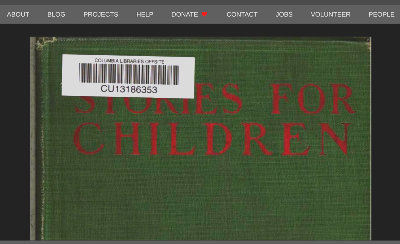
Carrying on with the public domain books for this week, here is another children's book, this one published in 1912: Stories For Children by Mrs. M.R. Allen (I have not been able to find out anything more about this author, not even her own name!).


This is another book written with of bit of faux-African-American dialect, but it is less offensive than other books in this genre, and thankfully it doesn't feature the "happy days on the plantation" type of framing that makes the books by Joel Chandler Harris and others so unreadable. In the introduction, the author claims that she collected the stories from African American storytellers, and I am inclined to believe her. The variety of the stories in this book does a good job of representing a range of African American folktale types, and the quirks in the stories seem indicative of the quirks of individual storytellers. How much better it would have been if the author had told us more about the storytellers, and credited them here in the book itself!

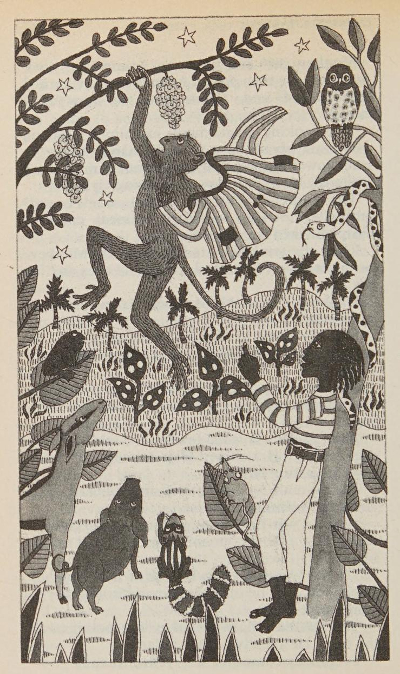
I was excited to find one of my favorite African American folktales here about violating the no-fishing-on-Sunday prohibition, where the protagonist is often named Simon. Here is Mrs. Allen's version: Simon the Fisher. (You can click on the image for a larger view.)


For comparison, here is a version recorded by Thomas Talley in Negro Folk Rhymes: Fishing Simon.


This is an African folktale, although the "Sunday" prohibition comes with the Christian context. Here's one African folktale for comparison: "Fishing Where the Water People Live" in Bundy's Folktales from Liberia published in the Journal of American Folklore, 1919.

I picked out several stories from Allen's book to include in the Anthology for the Reader's Guide that I'm working on now; here are some of them: trickster stories from Allen's book. 

by Mrs. M.R. Allen


Monday, August 29, 2022

African Diaspora at Internet Archive: At the Big House

I've started assembling public domain stories to go into the anthology part of the Reader's Guide to African Diaspora Folktales at the Internet Archive (the anthology was one of my favorite things about work on the African folktale guide), and this week I want to catch up on some of the public domain books that will be doing into the Guide. These are older books, and their use of dialect, especially eye-dialect, is undesirable in the extreme, but in preparing the stories for the anthology, I can try to minimize the eye-dialect so that the language can be better appreciated for its own sake.

So, the book I want to share today is At the Big House: Where Aunt Nancy and Aunt 'Phrony Held Forth on the Animal Folks by Anne Virginia Culbertson, published in 1904. 


You can read more about Culberton's life and career as a writer at Wikipedia. You will find 50 stories here, featuring animal characters, especially the trickster rabbit, Mr. Hare. One of the most fascinating aspects of the book is that it reflects the confluence of African American and Cherokee storytelling in eastern North Carolina at the time; among the Cherokee, Rabbit was an important trickster character.

The illustrations are by E. Warde Blaisdell, who did illustrations for other animal books like The Animals at the Fair and Beastly Rhymes. Here's his illustration for a funny story about Hare and Bear which I might include in the anthology; you can see how I have transcribed it, with the eye-dialect mostly removed, here: Mister Hare Dines with Mister Bear.


A book like this is probably not the kind of thing anybody is going to want to read from cover to cover, and the framing of the stories is pretty repugnant, much like the Uncle Remus framing in Joel Chandler Harris's books, but this is still a source we can use for stories and to get at a least a sense, however indirect, of the oral arts of African American storytellers in the late 19th century, as reflected in their literary exploitation by white writers like Culbertson.


Sunday, August 28, 2022

Diaspora Folktales at Internet Archive: Week 26

Welcome to the final August round-up! Plus, you can visit all the weekly roundups since the beginning last year when this African/Diaspora project began:
Africa: May 2021 - June - July - August - September - October - November - December - January 2022 
Diaspora: February 2022 - March - April - May - June - July - August.

And don't forget about the Anansi Book Club! The anthology this week is full of wonderful stories from southern Africa: The Stolen Water and Other Stories: Traditional Tales from Namibia by Jennifer Davis.

Now here are all of this week's books, which feature Caribbean stories and storytellers:

Saturday, August 27, 2022

African Diaspora at Internet Archive: Tales of the Caribbean

And for today's Caribbean stories, I have two books from the "Tales of the Caribbean" series by Evan Jones that you can find at Internet Archive!

The first is a book of creation stories: The Beginning of Things.


You will find 6 stories here, along with a chant and a poem (by James Berry!), plus a glossary in the back: Yellow Snake ~ Why God Went Away ~ Old Nelson Godon ~ Hurucan and Gucumatz ~ The Hundred Slaves ~ The Hole in the Clouds. Some of the stories are from the indigenous peoples of the Caribbean; others are stories from Africa.

The illustrations are by various artists as credited in the front of the book. Here is Clyde Pearson's illustration for "The Hundred Slaves," which is an Anansi story:


The other book is Witches and Duppies (for the African origins of the word duppy, see Wikipedia):


You will find 5 stories, plus a poem and also a glossary in the back: The Children of the Forest ~ The Old Higue ~ Kobi and Mr Brown ~ The Fairmaid of Karika ~ The Lagahoo.

This book also has illustrations by various artists with credits in the front of the book. This one is by Martin White: an obeah woman grinding a lizard into a charm.


There is also an Anansi book in this same series, and maybe it will eventually show up at the Archive too. Meanwhile, enjoy the stories that are here!


by Evan Jones


by Evan Jones


Friday, August 26, 2022

African Diaspora at Internet Archive: Haitian Creole

For today's Caribbean resource, it's all about Haitian Creole, with a book that includes a description of Haitian Creole plus a grammar, vocabulary, and abundant texts, including 25 folktales, plus proverbs and riddles and other material: Haitian Creole by Robert A. Hall, Jr.


The texts are presented with the Creole and English side by side, as you can see in this screenshot (click on the image for a larger view):


Here is a list of the folktale titles: Bouqui, Zombie and Bouquinette ~ Bouqui as Saddle-Horse ~ Malice Rides Bouqui ~ Bouqui in Love with the King's Child ~ Bouqui, Malice and Monkey ~ Bouqui Eats Own Mother ~ Bouqui and Malice Get Bird's Eggs ~ Big Klaus and Little Klaus ~ Bouqui at the Tailor's ~ Bouqui's Goat ~ Malice and Monkey's Tongue ~ King of Devils and Children ~ Bluebeard: Magical Escape ~ Why Dog Hates Cat ~ The Country Without Women ~ Ambition Kills the Rat ~ The King's Daughter's Ring ~ Wadile: Money-Giving Lizard ~ Sister and Brother: Clean and Dirty Water ~ Cat, Goat, and Dog ~ The Lion and the Donkey ~ The Thief and the Lord ~ Boy and Syrup-Vendor ~ Cherubin and Captain's Daughter ~ Laline ~ Brother Crab-Fisher and Brother Parrot ~ Man Bewitches Girl ~ Beautiful Son ~ The Tortoise and the Birds ~ The Misfortune They Cast on the Man who Killed a Snake ~ Tasting Rice ~ Jeanty-Henri: Cochon-Gras ~ Poor Boy who Married the King's Daughter ~ Man Eats Bird ~ Bull and Calf: Father vs Son ~ How Hawk Came to Eat Chicken.

One of Hall's collaborators on this project was Suzanne Comhaire-Sylvain, the author of Creole Tales from Haiti which I wrote about earlier at this blog.

So, if you are curious about Bouqui and Malice and/or if you are curious about Haitian Creole, this is the book for you, and it's just a click away at the Internet Archive:

by Robert A. Hall, Jr.


Thursday, August 25, 2022

African Diaspora at Internet Archive: Under the Storyteller's Spell

I'm really excited about today's Caribbean book because it was one that has been added to the Internet Archive recently, back in March of this year. When I first started this Diaspora project back in February, I looked and looked, hoping to find this book edited by Faustin Charles at the Archive... but it was not there. When I just did an update to my inventory recently, I discovered that it is now available! Yay! Here is the book: Under the Storyteller's Spell: Folktales from the Caribbean.


In addition to editing the book, Charles contributed two of the stories: Anancy and Monkey Business, and Pierra and the La Diablesse. You will also find stories by James Berry, Grace Nichols and Petronella Breinburg here (who have been featured in earlier blog posts), along with folktales retold by 10 more Caribbean authors.

The beautiful illustrations are by Rossetta Woolf. Here is her illustration for Charles's Anancy story:


Faustin Charles, born in 1944, is a poet and novelist from Trinidad now based in London. He is best known for his children's "animal" books, which you can also find at the Archive: books by Faustin Charles. The most famous is The Selfish Crocodile. (As you can guess, the crocodile finally learns not to be selfish, and he shares the river with all the other animals.) 


So, thanks to the ongoing digitization of books at the Internet Archive, this wonderful collection of Caribbean folktales is now just a click away with Controlled Digital Lending!

by Faustin Charles


Wednesday, August 24, 2022

African Diaspora at Internet Archive: Classic Caribbean Stories

So, after yesterday's exciting announcement (Reader's Guide to African Diaspora Folktales at the Internet Archive!), we're back to our regularly scheduled programming here, with books from the Caribbean being the focus this week. Today I want to feature an item from the "SunZone Heritage Series" published in Jamaica: Classic Caribbean Stories retold by Al Campbell.


These 16 stories doing a great job of conveying the wealth of storytelling traditions in the Caribbean, including important African stories that have taken on new forms in these different Caribbean communities: The Sun and the Moon (Cuba) ~ Juan Bobo Goes to Market (Puerto Rico) ~ Getting Common Sense (Jamaica) ~ The Bat (Taino) ~ Fruit Trees (Carib) ~ Eshu's Hat (Cuba) ~ Bouki Rents a Horse (Haiti) ~ Mancrow (Jamaica) ~ Olofi Splits the Difference (Cuba) ~ Timbo Limbo (Jamaica) ~ Tio Conejo wants to be BIG (Cuba) ~ The Lucky Pot (Guyana) ~ Touloulou Takes a Ride (Haiti) ~ Oshún Lures Ogún from the Forest (Cuba) ~ The Magic Orange Tree (Haiti) ~ How El Bizarrón Fooled the Devil (Cuba).

There are illustrations too, and I think they are by Shyam Sunder (who is credit with the book's cover design). Here is the illustration for the Tio Conejo story from Cuba, which is the classic African tale of "Trickster Seeks Endowments," told here about the trickster rabbit:


The back of the book lists the rest of the Heritage Series from SunZone publishers, and I will be keeping an eye out to see if any of these do make their way to the Internet Archive; it would be great to see any/all of them here!


Meanwhile, these classic Caribbean stories await you, just a click away at the Internet Archive, thanks to Controlled Digital Lending:

retold by Al Campbell


Tuesday, August 23, 2022

Reader's Guide to African Diaspora Folktales

I have an exciting announcement today: it's the (very preliminary) table of contents for my next book: A Reader's Guide to African Diaspora Folktales at the Internet Archive... along with folk songs and other folklore resources too! 


As in the previous book (free #OER!), A Reader's Guide to African Folktales at the Internet Archive, there will be 200 books with brief bibliography for each one, plus an anthology of 50 public domain stories. I'm excited to get to work on actually putting the book together now that I have a tentative list of books (plus a few substantial articles) to include! Here they are:

  1. Abrahams, Roger and John Szwed. After Africa: British West Indies
  2. Abrahams, Roger. African American Folktales
  3. Adams, Edward Clarkson Leverett. Tales of the Congaree
  4. Adeney, Anne. Anansi the Banana Thief
  5. Agard, John. Say It Again, Granny!
  6. Agard, John. Brer Rabbit: The Great Tug-of-War
  7. Allen, Mrs. M. R.. Stories for Children
  8. Ancelet, Barry Jean. Cajun and Creole Folktales
  9. Anderson, Izett and Frank Cundall. Jamaica Negro Proverbs and Sayings
  10. Backus, Emma M.. Folk Tales from Georgia
  11. Bagley, Julian. Candle-Lighting Time in Bodidalee
  12. Bascom, William. African Folktales in the New World
  13. Beckwith, Martha. Jamaica Anansi Stories
  14. Beckwith, Martha. Jamaica Folklore
  15. Belpré, Pura. Dance of the Animals
  16. Belpré, Pura.The Tiger and the Rabbit
  17. Bender, Robert. Old Mister Rabbit
  18. Bennett, Edna. More Jamaica Old-Time Sayings
  19. Berry, James. First Palm Trees
  20. Berry, James. Spiderman Anancy
  21. Blyton, Enid. The Brer Rabbit Book
  22. Borgenicht, David. Brer Rabbit
  23. Botkin, Benjamin. Lay My Burden Down a Folk History of Slavery
  24. Branner, John C.. How and Why Stories
  25. Breinburg, Petronella. Stories from the Caribbean
  26. Brennan, Jonathan. When Brer Rabbit Meets Coyote
  27. Brewer, John Mason. American Negro Folklore
  28. Brewer, John Mason. Dog Ghosts and Word on the Brazos
  29. Broussard, James. Louisiana Creole Dialect
  30. Bryan, Ashley. All Night, All Day
  31. Bryan, Ashley. Climbing Jacob's Ladder
  32. Bryan, Ashley. Dancing Granny
  33. Bryan, Ashley. Turtle Knows Your Name
  34. Burlin, Natalie. Negro Folksongs
  35. Campbell, Al. Classic Caribbean Tales
  36. Capshaw, Katherine. Children's Literature of the Harlem Renaissance
  37. Carter, Dorothy. Greedy Mariani
  38. Cassidy, Frederic. Dictionary of Jamaican English
  39. Charles, Faustin. Under the Storyteller's Spell
  40. Christensen, Abigail. Afro-American Folk Lore
  41. Comhaire-Sylvain, Suzanne. Creole Tales from Haiti
  42. Comissiong, Lynette. Mind me good now
  43. Coughlan, Margaret. Folklore From Africa to the United States
  44. Courlander, Harold. A Treasury of Afro-American Folklore
  45. Courlander, Harold. Negro Folk Music USA
  46. Courlander, Harold. Terrapin's Pot of Sense
  47. Courlander, Harold. The Drum and the Hoe
  48. Courlander, Harold. The Piece of Fire, and Other Haitian Tales
  49. Crowley, Daniel. African Folklore in the New World
  50. Culbertson, Anne. At the Big House
  51. Dance, Daryl Cumber. Folklore from Contemporary Jamaicans
  52. Dance, Daryl Cumber. From My People: African American Folklore
  53. Dance, Daryl Cumber. Honey, Hush! African American Women's Humor
  54. Dance, Daryl Cumber. Shuckin' and Jivin'
  55. De Sauza, James. Brother Anansi and the Cattle Ranch
  56. Dorson, Richard. American Negro Folktales
  57. Dorson, Richard. Negro Tales from Arkansas and Michigan
  58. Doucet, Sharon. Lapin Plays Possum: Trickster Tales
  59. Doucet, Sharon. Why Lapin's Ears Are Long and Other Tales
  60. Dresser, Cynthia. The Rainmaker's Dog
  61. Dundes, Alan. Mother Wit from the Laughing Barrel
  62. Edwards, Charles. Bahama Songs and Stories
  63. Eells, Elsie. Fairy Tales from Brazil
  64. Faulkner, William J.. The Days When Animals Talked
  65. Fauset, Arthur. Negro Folk Tales from the South
  66. Finnen, Wanda. Talking Drums
  67. Fleming, Elizabeth. Brer Rabbit Plays
  68. Ford, Lynette. Affrilachian Tales
  69. Ford, Lynette. Beyond the Briar Patch
  70. Fortier, Alcee. Louisiana Folktales
  71. Foss, Flora. The Caribbean
  72. Gates, Henry Louis. The Signifying Monkey
  73. Georgia Writer's Project. Drums and Shadows
  74. Gershator, Phillis. Tukama Tootles the Flute
  75. Gibbs, Laura. Tiny Tales of Anansi
  76. Gleeson, Brian. Anansi
  77. Goss, Linda. Jump Up and Say: Black Storytelling
  78. Goss, Linda. Talk That Talk: African-American Storytelling
  79. Green, Thomas. African American Folktales
  80. Green, Thomas. Greenwood Library of American Folktales
  81. Hall, Robert. Haitian Creole
  82. Hallworth, Grace. Cric Crac: West Indian Stories
  83. Hallworth, Grace. Down by the River
  84. Hallworth, Grace. Listen to This Story: Tales from the West Indies
  85. Hallworth, Grace. Sing Me a Story!
  86. Hamilton, Virginia. Her Stories: African American Tales
  87. Hamilton, Virginia. Ring of Tricksters
  88. Hamilton, Virginia. The People Could Fly
  89. Hamilton, Virginia. When Birds Could Talk and Bats Could Sing
  90. Hansen, Terrence. Types of the Folktale
  91. Harris, Joel Chandler. Nights With Uncle Remus
  92. Harris, Joel Chandler. The Complete Tales of Uncle Remus
  93. Harris, Joel Chandler. Uncle Remus: His Songs and His Sayings
  94. Haskins, James. Headless Haunt
  95. Haskins, James. Moaning Bones
  96. Hausman, Gerald. Duppy Talk
  97. Hayes, Joe. Dance, Nana, Dance: Cuban Folktales
  98. Herskovits, Melville and Frances Herskovits. Suriname Folklore
  99. Hughes, Langston and Arna Bontemps. Book of Negro Folklore
  100. Hull, Robert. Caribbean Stories
  101. Hurston, Zora Neale. Every Tongue Got to Confess
  102. Hurston, Zora Neale. Go, Gator, and Muddy the Water
  103. Hurston, Zora Neale. Of Mules and Men
  104. Ibekwe, Patrick. Wit and Wisdom of Africa
  105. Jackson, Bruce. Get Your Ass in the Water and Swim Like Me
  106. Jackson, Bruce. The Negro and His Folklore
  107. Jaquith, Priscilla. Bo Rabbit Smart For True
  108. Jekyll, Walter. Jamaican Song and Story
  109. Johnson, James Weldon. American Negro Spirituals
  110. Johnson, Janet. How Mr. Dog Got Tame
  111. Johnson, Janet. Lucky Jack and the Giant
  112. Johnson, John. Folklore From Antigua
  113. Jones, Bessie. Step It Down: Games, Plays, Songs & Stories
  114. Jones, Charles C.. Negro Myths From the Georgia Coast
  115. Jones, Evan. The Beginning of Things
  116. Joseph, Lynn. The Mermaid's Twin Sister: Stories from Trinidad
  117. Kantor, Susan. 101 African-American Read-Aloud Stories
  118. Keens-Douglas, Richardo. Anancy and the Haunted House
  119. Keens-Douglas, Richardo. La Diablesse and the Baby
  120. Keens-Douglas, Richardo. Mama God, Papa God
  121. Lester, Julius. Black Folktales
  122. Lester, Julius. John Henry
  123. Lester, Julius. The Knee-High Man and Other Tales
  124. Lester, Julius. Uncle Remus: The Complete Tales
  125. Levine, Lawrence. Black Culture and Black Consciousness
  126. Lindahl, Carl. Swapping Stories: Folktales from Louisiana
  127. Lomax, Alan, J. D. Elder and Bess Lomax. Brown Girl in the Ring
  128. Lomax, John and Alan Lomax. American Ballads and Folk Songs
  129. Loya, Olga. The Wax Man
  130. Makhanlall, David. The Further Adventures of Brer Anansi
  131. Makhanlall, David. The Invincible Brer Anansi
  132. Marsh, Vivian. Negro Folklore in America
  133. McCartney, Norma. Tales of the Immortelles
  134. McCulloch, Derek. Stagger Lee
  135. McKissack, Pat. The Dark-Thirty
  136. Medearis, Angela. Tailypo
  137. Medearis, Angela. The Freedom Riddle
  138. Medearis, Angela. The Ghost of Sifty-Sifty Sam
  139. Metaxas, Eric. Brer Rabbit and the Wonderful Tarbaby
  140. Milne-Home, Mary. Mamma's Black Nurse Stories
  141. National Association of Black Storytellers. Sayin' Somethin'
  142. Nichols, Grace and John Agard. Under the Moon and Over the Sea
  143. Norfolk, Bobby and Sherry Norfolk. Anansi and the Tug of War
  144. Norfolk, Bobby and Sherry Norfolk. The Moral of the Story
  145. Odum, Howard. Negro Workaday Songs
  146. Odum, Howard. The Negro and His Songs
  147. Owen, Mary. Old Rabbit, the Voodoo, and Other Sorcerers
  148. Parker, Victoria. Traditional Tales from the Caribbean
  149. Parks, Van Dyke. Jump!
  150. Parsons, Elsie Clews. Folklore From Elizabeth City, Virginia
  151. Parsons, Elsie Clews. Folklore from Guilford County
  152. Parsons, Elsie Clews. Folklore from the Cape Verde Islands
  153. Parsons, Elsie Clews. Folklore of the Antilles
  154. Parsons, Elsie Clews. Folklore of the Sea Islands, South Carolina
  155. Parsons, Elsie Clews. Folktales of Andros Island, Bahamas
  156. Prahlad, Anand. African American Folklore
  157. Prahlad, Anand. African-American Proverbs in Context
  158. Price, Richard and Sally Price. Two Evenings in Saramaka
  159. Puckett, Newbell. Folk Beliefs of the Southern Negro
  160. Rees, Ennis. Brer Rabbit and His Tricks
  161. Reneaux, J. J.. How Animals Saved the People
  162. Roberts, John W.. From Trickster to Badman
  163. Sale, John B.. The Tree Named John
  164. San Souci, Robert. Callie Ann and Mistah Bear
  165. San Souci, Robert. Hired Hand
  166. San Souci, Robert. The Twins and the Bird of Darkness
  167. Sanfield, Steve. A Natural Man: The True Story of John Henry
  168. Sanfield, Steve. The Adventures of High John the Conqueror
  169. Schomp, Virginia. Brer Rabbit and the Goober Patch
  170. Sherlock, Philip. Anansi the Spider Man
  171. Sherlock, Philip. Tales from the West Indies
  172. Siegelson, Kim. In the Time of the Drums
  173. Smiley, Portia. Folklore from the Southern United States
  174. Smith, Pamela Colman. Annancy Stories
  175. Spalding, Henry. Encyclopedia of Black Folklore and Humor
  176. Stafford, Alphonso. Animal Fables From the Dark Continent
  177. Stevens, Janet. Tops and Bottoms
  178. Stoddard, Albert. Animal Tales Told In The Gullah Dialect
  179. Stuckey, Sterling. Going Through the Storm
  180. Talley, Thomas. Negro Folk Rhymes
  181. Talley, Thomas. The Negro Traditions
  182. Temple, Frances. Tiger Soup
  183. Thompson, Rose. Hush Child, Can't You Hear the Music?
  184. Torrence, Jackie. Importance of Pot Liquor
  185. Veerhoeve, Jan and Ursy Lichtveld. Creole Drum
  186. Wahl, Jan. Little Eight John
  187. Waters, Donald. Strange Ways and Sweet Dreams
  188. Watkins, Mel. African American humor
  189. Watson, G. Llewellyn. Jamaican Sayings
  190. Whiting, Helen. Negro Folk Tales
  191. Wilkinson, Andrews. Plantation Stories of Old Louisiana
  192. Wolkstein, Diane. Bouki Dances the Kokioko
  193. Wolkstein, Diane. The Banza: A Haitian Story
  194. Wolkstein, Diane. The Magic Orange Tree: Haitian Folktales
  195. Work II, John Wesley. Folk Songs of the American Negro
  196. Work III, John Wesley. American Negro Songs
  197. Works Project Administration. South Carolina Folk Tales
  198. Young, Martha. Behind the Dark Pines
  199. Young, Martha. Plantation Bird Legends
  200. Young, Richard and Judy Young. African-American Folktales

Monday, August 22, 2022

African Diaspora at Internet Archive: Jamaican Song and Story

It's Caribbean stories this week, going back now to a classic of Jamaican folklore: Jamaican Song and Story: Annancy Stories, Digging Sings, Ring Tunes, and Dancing Tunes by Walter Jekyll, published in 1907.


There are 51 stories in the book, plus songs... and some of the stories also contains songs, as you can see in this Anansi story:


Here is a list of the titles of the stories: Annancy and Brother Tiger ~ Yung-Kyum-Pyung ~ King Daniel ~ Tomby ~ How Monkey manage Annancy ~ Blackbird and Woss-woss ~ The Three Sisters ~ William Tell ~ Brother Annancy and Brother Death ~ MrBluebeard ~ Annancy, Puss and Ratta ~ Toad and Donkey ~ Snake the Postman ~ Doba ~ Dry-Bone ~ Annancy and the Old Lady's Field ~ Man-Crow ~ Saylan ~ Annancy and Screech-Owl ~ Annancy and Cow ~ Tacoma and the Old-Witch Girl ~ Devil's Honey-Dram ~ Annancy in Crab Country ~ Gaulin ~ Annancy, Monkey and Tiger ~ The Three Pigs ~ Dummy ~ Annancy and Candlefly ~ Parson Puss and Parson Dog ~ Chicken-Hawk ~ Pretty Poll ~ Annancy and Hog ~ Dry-River ~ Yellow Snake ~ Cow and Annancy ~ Leah and Tiger ~ Timmolimmo ~ Calcutta Monkey and Annancy ~ Open Sesame ~ Sea-Mahmy ~ Crab and his Corn-piece ~ Dry-Grass and Fire ~ John Crow ~ Tiger's Death ~ The Old Lady and the Jar ~ John Crow and Fowl-Hawk ~ Finger Quashy ~ Annancy and his Fish-Pot ~ Hog and Dog ~ Devil and the Princess ~ Wheeler.

Walter Jekyll was a former clergyman who moved to Jamaican in 1894 and began farming there; he collected the stories and songs in this book from the men who worked for him. He died in Jamaica in 1929. You can read more about his life and career at Wikipedia.

Jekyll also encouraged the young Claude McKay to write his poems, Songs of Jamaica, in patois, and he supplied the preface to the book. Jekyll may also have written the notes to the poems; for more about that, see the Digital Edition of Songs of Jamaica. Claude McKay went on to become a leading figure of the Harlem Renaissance; you can find out more at Wikipedia.

There's also an introduction from Alice Werner, a scholar of African languages and cultures, who puts a special emphasis on the African heritage in Jamaican storytelling traditions. (More about Alice Werner.)

So, if you want to find out about African Anansi in Jamaica, this book is a great resource, just a click away at the Internet Archive. I'll be back with more Caribbean stories tomorrow!

by Walter Jekyll