Showing posts with label IAAW65. Show all posts

Saturday, September 3, 2022

African Diaspora at Internet Archive: How and Why Tales from Brazilian Folklore

For today's public domain book, it's Fairy Tales from Brazil: How and Why Tales from Brazilian Folklore by Elsie Spicer Eells, published in 1917.


Elsie Spicer Eells lived in Brazil for several years where her husband was a missionary, and that is when she began collecting this stories; you can find out more at Wikipedia. 

There are not many sources for Brazilian stories in English, which makes this book by Eells especially useful, and I've picked out several stories that are good candidates for the public domain anthology to go with the Reader's Guide to African Diaspora Folktales at the Internet Archive. You can read them here: How the Rabbit Lost His Tail, How the Toad Got His Bruises, How the Monkey Got Food When He Was Hungry, Why the Bananas Belong to the Monkey and Why the Monkey Still Has a Tail. As you can see from the titles, the monkey has taken on an important role as a trickster in the Brazilian stories.

There's also a LibriVox audio version of this book at the Archive.


So, if you are curious to read some folktales from Brazil, this book is a place to start!

by Elsie Spicer Eells


Thursday, September 1, 2022

African Diaspora at Internet Archive: How and Why Stories

Carrying on with the public domain books this week, here is an unusual little book of a stories, remembered from childhood, by John C. Branner: How and Why Stories.


John C. Branner was an important geologist, and you can read more about his career at Wikipedia. This book is his only foray into this type of storytelling, and the preliminary materials are extremely revealing. Branner was born in 1850, and as the introduction makes clear, he saw slavery as a completely benevolent institution about which he felt nothing but sentimental affection... until a freed slave managed to make at least a small breakthrough in his thinking so that he realized, even if dimly, that, uh, slavery was a bad thing. Anyway, the prefactory materials are very much worth reading; I would suspect that this endorsement of slavery as a benevolent institution is behind the thinking of many of the white authors who published books of stories they remembered from childhood. The difference is just that Branner has shared his thoughts here out loud.

I'll admit that it makes for some pretty repugnant reading, though, so if you just want to skip to the stories, skip to the stories... and there are some really great ones in here! The storytellers that Branner was in contact with as a child told highly Christianized versions of the stories in which God, the Devil, Noah, etc. play prominent roles. One of my favorite stories in here is about why the cat has nine lives, and you can read a version with the eye-dialect removed here: Why the Cat Has Nine Lives.

I'm guessing it didn't even cross Branner's mind, who puts a positive spin on the story, but it's clearly a story born from the enormous pain of enslaved women separated from their children, with Noah as a heartless overseer or master. Heavy stuff, and heart-rending, even if Branner doesn't exactly get it.

The illustrations of the animals are by W. S. Atkinson, so here is his illustration for the story of the cat's nine lives:


Plus there are actual story illustrations by R. K. Culver, as here where Noah is pulling the cat up into the ark:


You'll find 21 stories here, and if you can managed to tolerate the eye-dialect, you can use this book to hear, albeit remotely and indirectly, the voices of African American storytellers circa 1860, when John Branner was growing up in a household that owned people as slaves.

by John C. Branner


Wednesday, August 31, 2022

African Diaspora at Internet Archive: Plantation Stories of Old Louisiana

The theme for this week is public domain books, and today's book follows Joel Chandler Harris's formula for the Uncle Remus books, but this time the storyteller is a former slave named "Jason," and the stories are set in Louisiana: Plantation Stories of Old Louisiana by Andrews Wilkinson.


The illustrations are by Charles Bull, a well -known wildlife illustrator of the time (more at Wikipedia; you can see his illustrated Aesop's fables here). This is Bull's illustration for the story of Mink and Wildcat going fishing:


Wilkinson is also the author of another book of Louisiana stories which is a mix of folktales and anecdotes: Boy Holidays in the Louisiana Wilds, published in 1917.


The illustrations for this book are by Harold James Cue. Here's his illustration for the story of Fox and Owl.


This use of eye-dialect and the racist plantation sentimentalism of the frametale makes these stories pretty repugnant to read, but the stories are a better read I think with the eye-dialect and the frame removed; here's one of the stories from Plantation Stories edited in that way, a classic trickster tale of food frustrations: Mr. Fox and Mrs. Possum Dine Together. That will be a good story to include in the public domain anthology for the Reader's Guide I'm working on now, which is why I'm focusing on the public domain books this week. These published stories are indirect evidence for African American storytelling traditions, although it takes some work to try to disentangle them, at least partly, from the racist context that made their publication possible. So, read the books with that spirit in mind, looking for traces that the true stories have left behind:

by Andrews Wilkinson


Tuesday, August 30, 2022

African Diaspora at Internet Archive: Stories For Children

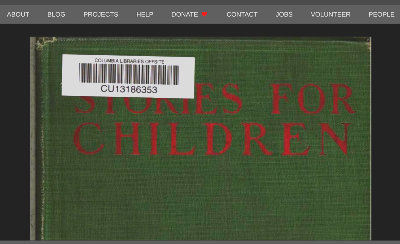
Carrying on with the public domain books for this week, here is another children's book, this one published in 1912: Stories For Children by Mrs. M.R. Allen (I have not been able to find out anything more about this author, not even her own name!).


This is another book written with of bit of faux-African-American dialect, but it is less offensive than other books in this genre, and thankfully it doesn't feature the "happy days on the plantation" type of framing that makes the books by Joel Chandler Harris and others so unreadable. In the introduction, the author claims that she collected the stories from African American storytellers, and I am inclined to believe her. The variety of the stories in this book does a good job of representing a range of African American folktale types, and the quirks in the stories seem indicative of the quirks of individual storytellers. How much better it would have been if the author had told us more about the storytellers, and credited them here in the book itself!

I was excited to find one of my favorite African American folktales here about violating the no-fishing-on-Sunday prohibition, where the protagonist is often named Simon. Here is Mrs. Allen's version: Simon the Fisher. (You can click on the image for a larger view.)


For comparison, here is a version recorded by Thomas Talley in Negro Folk Rhymes: Fishing Simon.


This is an African folktale, although the "Sunday" prohibition comes with the Christian context. Here's one African folktale for comparison: "Fishing Where the Water People Live" in Bundy's Folktales from Liberia published in the Journal of American Folklore, 1919.

I picked out several stories from Allen's book to include in the Anthology for the Reader's Guide that I'm working on now; here are some of them: trickster stories from Allen's book. 

by Mrs. M.R. Allen


Monday, August 29, 2022

African Diaspora at Internet Archive: At the Big House

I've started assembling public domain stories to go into the anthology part of the Reader's Guide to African Diaspora Folktales at the Internet Archive (the anthology was one of my favorite things about work on the African folktale guide), and this week I want to catch up on some of the public domain books that will be doing into the Guide. These are older books, and their use of dialect, especially eye-dialect, is undesirable in the extreme, but in preparing the stories for the anthology, I can try to minimize the eye-dialect so that the language can be better appreciated for its own sake.

So, the book I want to share today is At the Big House: Where Aunt Nancy and Aunt 'Phrony Held Forth on the Animal Folks by Anne Virginia Culbertson, published in 1904. 


You can read more about Culberton's life and career as a writer at Wikipedia. You will find 50 stories here, featuring animal characters, especially the trickster rabbit, Mr. Hare. One of the most fascinating aspects of the book is that it reflects the confluence of African American and Cherokee storytelling in eastern North Carolina at the time; among the Cherokee, Rabbit was an important trickster character.

The illustrations are by E. Warde Blaisdell, who did illustrations for other animal books like The Animals at the Fair and Beastly Rhymes. Here's his illustration for a funny story about Hare and Bear which I might include in the anthology; you can see how I have transcribed it, with the eye-dialect mostly removed, here: Mister Hare Dines with Mister Bear.


A book like this is probably not the kind of thing anybody is going to want to read from cover to cover, and the framing of the stories is pretty repugnant, much like the Uncle Remus framing in Joel Chandler Harris's books, but this is still a source we can use for stories and to get at a least a sense, however indirect, of the oral arts of African American storytellers in the late 19th century, as reflected in their literary exploitation by white writers like Culbertson.