Showing posts with label IAAW62. Show all posts

Saturday, August 13, 2022

African Diaspora at the Internet Archive: Spreadsheet (14)

It's been a while since I updated the spreadsheet, but here's the good news: there are now over 7800 items from over 180 different sources linked from the spreadsheet to the pages of books at the Internet Archive, everything just a click away! You can find it all at the African Diaspora Folktale Spreadsheet. And, of course, the big African Folktale Spreadsheet is available also, with over 10,000 stories there. :-)

So, here's the Diaspora spreadsheet embedded (be patient while it loads; it takes a while for thousands of things to load in the post):

I've probably got another couple updates to do to this spreadsheet, but I'm nearly done inventorying the African Diaspora materials at the Archive, which means I'm almost ready to start writing the Reader's Guide to African Diaspora Folktales at the Internet Archive.

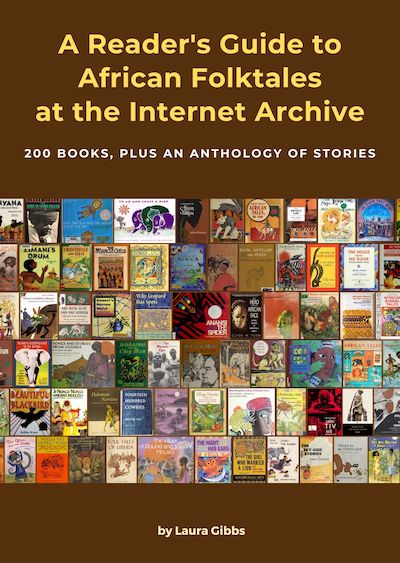
I'll be using the same model as in the Reader's Guide to African Folktales at the Internet Archive: 200 book entries, followed by 50 public domain stories. I might even do more than 50 public domain stories since there is so much more public domain material to work with. I'm really excited to get started.

Here's where you can your free download of the African Folktales guide!


Thursday, August 11, 2022

African Diaspora at Internet Archive: Go, Gator, and Muddy the Water

Following up on the Harlem Renaissance themes from yesterday (Fauset) and the day before (Brownies' Book), I wanted to share four more books of folklore by Zora Neale Hurston that you can find at the Internet Archive. The first is: Go, Gator, and Muddy the Water: Writings from the Federal Writers' Project.


This book contains writings by Zora Neale Hurston when she was part of the Federal Writers' Project, a divison of the WPA, living and working in Eatonville, Florida in 1938 and 1939. The book was published in 1999, and some of the pieces had not ever been published before. There is a helpful introductory essay by Pamela Bordelon which situates this work in the context of Hurston's other folklore research and her life generally.

Here is a list of the stories you will find here: The Little Man ~ The Big Man ~ The Ugly Man ~ The Storm Met the Hurricane ~ When the Wind Blew Hard ~ A Story from Tampa ~ Big Vegetables ~ Round Ocala ~ Planting Corn ~ Sis Snail ~ God and the Devil ~ Big John the Fortuneteller ~ When John Was in Charge ~ Daddy Mention's Escape ~ Daddy Mention and the Mule ~ Why Negroes Are Black ~ The White Man's Prayer ~ Diddy-Wah-Diddy ~ Zar ~ Beluthahatchee ~ Heaven ~ West Hell ~ Jack and the Beanstalk ~ How the Florida Land Turtle Got its Name ~ Uncle Monday ~ Roy Makes a Car.

The second book is The Sanctified Church, published in 1981, which also contains Hurston's FWP writings.


This anthology is less carefully researched, and as Bordelon points out in Go Gator, some of the materials here were not actually written by Hurston, but are instead the work of other FWP writers working in Florida at the time: the "Daddy Mention" essay here is by Martin Richardson (but see the "Daddy Mention" materials in Go, Gator above for Hurston's work on this folk figure), the "Father Abraham" essay is by J. J. Johnson, and "Cures and Beliefs" come from Viola Muse. These are valuable folklore pieces to be sure, which is why I wanted to make sure to share this book, but they are not by Hurston. So, proceed with caution... but also make sure to read and enjoy the beautiful foreword by Toni Cade Bambara!

Next, I wanted to share this anthology of Hurston's stories, focused on the supernatural: The Skull Talks Back and Other Haunting Tales.


You'll find six African American folktales here: Big, Bad Sixteen ~ Bill, the Talking Mule ~ The Skull Talks Back ~ The Witch Who Could Slip Off Her Skin ~ High Walker ~ The Haunted House. The stories are adapted by Joyce Carol Thomas, a renowned African American children's book author, but she does not provide any information about the sources or contexts of the stories. So, this is a fun book to read for getting to know the stories, but they do not provide a trail to lead you back to the sources in Hurston's publications. In addition, because Thomas has changed some of the titles ("Big Sixteen" has become "Big Bad Sixteen"), it can take some sleuthing to track down the sources in Hurston. This book would be so much more useful with a guide to where to find these stories in Hurston; if I can remember (!), I'll add a list of sources here later.

The eerie illustrations are by Leonard Jenkins:


Finally, I wanted to share the monumental (1000 pages) Library of America publication: Folklore, Memoirs, and Other Writings.


Of special interest here is the section of Selected Articles, which features some of the Federal Writers Project materials, plus essays like "High John de Conquerer" and "The Eatonville Anthology."

Plus you can see all the books by Hurston at the Archive too, including not just her folklore books but her stories and novels also. This screenshot shows just a few of the many books you will find:


And you can use this link for all the posts about Hurston's books at this blog. So much Hurston goodness awaits you at the Internet Archive, all thanks to the power of Controlled Digital Lending.


by Zora Neale Hurston


by Zora Neale Hurston


Wednesday, August 10, 2022

African Diaspora at Internet Archive: Negro Tales from the South

Since I wrote about the Harlem Renaissance in yesterday's post, I am excited to write about Arthur Huff Fauset today, a remarkable African American folklorist; you can read all about his life and career, including his work with Alain Locke, at Wikipedia. There is also a detailed biography accompanying the records for his papers deposited with the University of Pennsylvania, and you can find Fauset featured here in Seeking Better Representations in Anthropology, documenting the accomplishments of 28 Black anthropologists, which is the source for this photo:


In this article published in the Journal of American Folklore in 1927 (which means it is about to enter the public domain!), Fauset reports 80 folktales from Alabama, Missisippi, and Louisiana, plus riddles too: Negro Folk Tales from the South.


Fauset collected the stories during the summer of 1925, and here is a list of the stories you will find here: T'appin's Magic Dipper and Whip ~ Rabbit Fools Buzzard ~ Where They Throw Away the Oranges ~ Buzzard Trapes Rabbit in a Hollow Stump ~ Mock Beheading ~ No Tracks Coming Back ~ T'appin Fooled by Billy Goat's Eyes ~ Lion Hunt ~ Rabbit Gets Hung ~ Rabbit Ties Fox's Tail to the Dead Horse ~ Promised Feast ~ Rabbit Rides Elephant across the Stream ~ Rabbit Counts Alligator's Family ~ Rabbit Kills Bear's Child for Land ~ Rabbit Teaches Bear a Song ~ Rabbit Shames Before Ladies ~ Rabbit at the Party ~ Fox Boils Rabbit in the Pot ~ In the Well ~ Tar Baby ~ Hunting Muscadines ~ Magic Formula: The Cotton Hoe ~ B'rer Rabbit's Laughing Place ~ Rabbit Plays Possum ~ The Watcher Blinded ~ Frog Suitor ~ Fire Catches Rabbit ~ Playing Godfather ~ Rooster and Fox ~ Br'er Deer Marries Sun's Daughter ~ Picking Peaches: Down the Chimney into the Boiling Pot ~ Why Alligator Can't Talk ~ Why Dogs Jump on Each Other's Heads ~ Try Him! Try Him! ~ In the Cow's Belly ~ La Pain's Mother Sold as Codfish ~ La Pain and the Turtle ~ Are You Man? ~ Catskin ~ The Son Who Sought His Fortune ~ The Magic Water ~ The Friendly Demon ~ The Wicked Mother ~ The Strong One ~ Three Fools ~ Three More Fools ~ Little Claus ~ The Seventh Son ~ The Three Golden Apples ~ The Homeless Animals ~ The Haunted House ~ The Three Questions ~ The Marvelous Potato ~ Catching the Gallinipper ~ The Bird Dog ~ Voices in the Frying Pan ~ The Three Suitors ~ Running with His Shoes Off ~ Too Much Tongue ~ Lazy John ~ Master Gone to Philanewyork ~ Shooting Grasshoppers ~ Fooling God ~ Darkening the Hole ~ All Dressed Up and No Place to Go ~ Mare's Eggs ~ Knee Deep ~ Lighting is Hell ~ The Guilty Lover ~ The Ghost Walks ~ Live Bear Catch ~ Sagacious Jew ~ Coming with the Dogs ~ Dog Dinner ~ The Man Who Invented Fire ~ Bible and Swimming ~ Ten-Mile Boots ~ Horse Stay Outside ~ Nothing for the Negro ~ Catch Hell Just the Same.

There are some tunes recorded in the stories too!


So, this article will enter the public domain next year, in 2023, and I am thinking that I would like to build a book around this, re-publishing Fauset's stories, while adding commentary and parallels to supplement his own notes to the stories. What do you think? I think that would be a fabulous project, and also a way to honor Fauset's groundbreaking work as an American folklorist. And the papers held at the University of Pennsylvania look like an amazing resource; perhaps I could find a way to go there and take a look!

Meanwhile, you can also find another book by Fauset at the Archive: Black Gods of the Metropolis; Negro Religious Cults of the Urban North. 


The Archive does not have a copy of Fauset's important book, Folklore from Nova Scotia (yes, stories from Black storytellers in Canada), but you can read that online at Hathi Trust. That book will be entering the public domain in just a few years; it was published in 1931. Yay for books in the public domain... and for the holiday we get to celebrate every year on January 1, Public Domain Day, as new books enter the public domain on that day.

Tuesday, August 9, 2022

African Diaspora at Internet Archive: Brownies' Book

As I promised in yesterday's post about A. O. Stafford, I wanted to write about W.E.B. DuBois's children's literary magazine, The Brownies' Book, today; Stafford is just one of many writers whose work appeared in the pages of this magazine, which was published in 1920 and 1921, for a total of 22 issues.

There has not been a complete republication of the contents of these magazines, but you can read it all at the Internet Archive, thanks to the way that the Wayback Machine was archived the web presentation of the materials at this wonderful digital project from the University of Nebraska Libraries: The Tar Baby and the Tomahawk: Race and Ethnic Images in American Children's Literature, 1880-1939.

Here's a link to the archived Wayback Machine copy:


You will find all kinds of materials in the pages of these magazines, including these African and African American folktales; most of the authors have appeared in the pages of this blog before, like A. O. Stafford, C. Kamba Simango, Elsie Clews Parsons, and Julian Elihu Bagley.

African stories:
Some African Riddle (A. O. Stafford)
Mphontholo Ne Shulo (C. Kamba Simango)
The Moon-Bird (Coralie Howard Haman)
Wolf and His Nephew (Elsie Clews Parsons)

African Diaspora stories:
Chronicles of Br'er Rabbit (Julia Price Burrell)
The Little Pig's Way Out (Julian Elihu Bagley)

As you can see, folktales are not especially common in the pages of the magazine; it is geared much more to literary works. To learn something about the DuBois's motivations in publishing this magazine and the choices that he made, there is this excellent study available at the Internet Archive too: Children's Literature of the Harlem Renaissance by Katharine Capshaw Smith.


The first chapter of the book is devoted to DuBois's efforts in both The Crisis (which had an annual children's issue every year from 1912 to 1934), and in The Brownies' Book.

Here are just a few of the covers of The Brownies' Book:


Monday, August 8, 2022

African Diaspora at Internet Archive: Animal Fables From the Dark Continent

After all the great scholarship from last week, I wanted to get back to stories this week, starting with a really fascinating old book: Animal Fables From the Dark Continent by Alphonso Orenzo Stafford.


What makes this book fascinating is that it is all about the African heritage of African American stories, bringing together 20 stories from Africa with 14 stories that are from African American storytellers. Here is a list of the titles: The Happy Age in the Animal World ~ The Squirrel and the Kingship ~ The Dog and the Kingship ~ The Dog and the Clever Rabbit ~ The Dog and the Leopard ~ The Cat and the Hen ~ The Cat, the Rat, and the Fox ~ Why the Cat Came to Man's House ~ The Rabbit and the Other Animals ~ The Rabbit and the Animal Wizard ~ The Rabbit and the Elephant ~ The Rabbit and the Alligator ~ The Wolf's Butter ~ The Rabbit Escapes the Wolf's Anger ~ The Rabbit and His Ears ~ The Rabbit and the Moon ~ Why the Goat Left the Jungle ~ The Frog and the Elephant ~ The Frog and the Leopard ~ The Jackal and the Leopard ~ The Jackal and the Heron ~ The Jackal and the Hyena ~ The Hyena's Spots ~ The Hyena's Punishment ~ The Wolf and His Two Dinners ~ The Sense of the Weasel ~ The Turtle, the Wolf, and the Hyena ~ The Home of the Rat ~ The Alligator and the Moor Hen ~ The Hawk and the Rooster ~ The Owl and His Friends ~ The Rival Roosters ~ The Monkey Finds Worry ~ Jan the Animal Judge.

The book has illustrations by Sarah Noble Ives; you can read more about her life and career at Wikipedia. Here is her illustration for the dog who wanted to be king:


And here you can see the fox, the cat, and the rat:


As the author describes it, the book is a testimony to "the folklore of the Negro race," both in Africa and in the Americas. 

I haven't been able to find out much about the author, but he was clearly committed to this integrated study of African and African American culture. For example, in 1916 (ten years after the publication of this book) Stafford published an article about proverbs that reflects his interest in African cultures: "The Mind of the African Negro as Reflected in his Proverbs;" it appeared in The Journal of Negro History, which is also available at the Archive. Also of interest: in 1915 he published "Folk Literature of the Negro" in W.E.B. DuBois's The Crisis, also at the Archive.

In addition, you can find more work by Stafford in W.E.B. DuBois's children's literary magazine, The Brownies' Book: in April 1920 Stafford published "The Twin Heroes: An African Myth," and in May 1920 "Some African Riddles." I'll take that as a reason to come back tomorrow with more about the remarkable Brownies' Book. 

Meanwhile, Stafford's book awaits you at the Internet Archive!

by Alphonso Orenzo Stafford