Showing posts with label IAAW35. Show all posts

Friday, January 14, 2022

Africa at the Internet Archive: Spreadsheet (9)

Here is the second spreadsheet update of 2022; you can read about the evolution of this spreadsheet project in the previous updates. There are now over 9400 stories listed from over 350 different books and articles, and I'm getting near the end of indexing all the stories I can find at the Internet Archive, so in February I'll be moving on to a related project: indexing African American and Caribbean stories, which is perfect for Black History Month (observed in the U.S. during the month of February).

Meanwhile, as always, you can access the spreadsheet here: African Tales Spreadsheet, and also by the link in the tab navigation above.

In the spreadsheet, you'll find links for each story to the Internet Archive page, plus links to versions of the stories that I've written (more about those tiny versions of the stories here: Africa.LauraGibbs.net).


As I've explained in previous posts, you can do searches and create data filters, and you can also copy the spreadsheet for your own use. For example, I have my own copy of the spreadsheet where I keep track of which stories have animals, stories I want to use for a "tiny tales" project, etc. etc.

These are just a few of the books I've indexed since the last update; the links below go to the book at Internet Archive: enjoy!


Thursday, January 13, 2022

Africa at the Internet Archive: Brock Peters and Eartha Kitt

I've got something different for today's post: it's a record album with 3 stories read aloud from this book: African Village Folktales by Edna Mason Kaula.


Even better: the reader is Brock Peters! You can read about his career at Wikipedia; I always think of him from his Star Trek roles; here he is in Undiscovered Country.


For some reason not clear to me, the Internet Archive's copy of the actual book is not available for borrowing in general; it's only for people with print disabilities. I'd never seen that restriction before and, when I asked the help desk, they told me they hope it will be available for lending at a later date. Meanwhile, you can get a taste of it from the record album. (There are two other record albums to complete the book, but the Internet Archive only has one; if they acquire either of the other albums, you know I will update this post!)

Something I just realized recently is that you can link to specific tracks on a record album, so here are the links to the 5 stories (each story has an informative introduction, followed by the story itself): Audio: The Mighty Warrior in Hare's House / Audio: A Lot of Silence Makes a Great Noise / Audio: The Light in the House / Audio: Lion and the Woman / Audio: The Wise Old Camel.

You might recall that I shared an earlier record album with Eartha Kitt (wow!) reading selections from Paul Radin's African Folktales; here's an earlier blog post about that book and the audio recording: Folk Tales of the Tribes of Africa.


Wednesday, January 12, 2022

Africa at the Internet Archive: Why Goats Smell Bad

Earlier this week I wrote about Barefoot Books (a fabulous publisher of story books), and that reminded me that I need to write a post about Raouf Mama, who is the author of these two books: The Barefoot Book of Tropical Tales and also Why Goats Smell Bad and Other Stories From Benin, both of them just a click away at the Internet Archive!


Raouf Mama is a storyteller from Benin and also a professor of literature at Eastern Connecticut State University. Why Goats Smell Bad is a collection of 20 different folktales from Benin, with wonderful woodcuts by Imna Arroyo (b. 1951), a Puerto Rican artist who is also on the faculty at Eastern Connecticut State University. Here are links to the individual stories: The Unwanted Child / The Twin Princesses / The Prince and the Orphan / The Orphan and the Leper / The Magic Drum / The Song of the Spoiled Child / The Dance of Poverty / The Greedy Father / When the River Becomes the Big Hole / Can You Save the Day? / The Girl Who Brought the Rainy Season and the Dry Season / The King Who Would Be God / How Chameleon Became a Teacher / The Wrath of the Hawk / How Hare Drank Boiling Water and Married the Beautiful Princess / The Origin of Crocodiles, Fish, and Other Water Creatures / Why Goats Smell Bad / The Name-guessing Contest / How Yogbo the Glutton Was Tricked / How Yogbo the Glutton Met His Death.

Tropical Tales is a collection of folktales that includes three African tales, along with stories from South Asia and the Caribbean, with illustrations by British artist Deirdre Hyde. Here are links to the three African stories: The Magic Drum / Why Cat and Dog Do Not Get Along / Leopard's Argument with Monkey.

To find out more, listen in on this interview Mama did for Connecticut Public Radio: The Sage of Storytelling: Raouf Mama.


And here he is in action: don't you want to take a class from this professor???! I do!


Meanwhile, his books await you at the Internet Archive!

Tuesday, January 11, 2022

Africa at the Internet Archive: Amadu's Bundle

On Sunday and Monday this week I focused on books newly added to the Internet Archive, and that's what I am going to do again today, with a fabulous and even mysterious book... I've shared what I know about the book in this blog post, but I will be grateful for any additional information people can provide! Here's the book: Amadu's Bundle: Fulani Tales of Love and Djinns by Malum Amadu, edited by Gulla Kell, and translated by Ronald Moody... all three of them fascinating characters! Details below.


The book contains 28 stories supplied by Malum Amadu. There is a tantalizing description of Amadu in the opening pages of the book by Gulla Kell; be sure to read her editor's note. 

Of course I wanted to find out more, and this led me to an article at JSTOR, which is free to access if you sign up for a JSTOR account: Prose and Poetry of the Ful'be by G. Pfeffer. This is a very thought-provoking article about folklore and literature, focused on the materials that Malam Amadu shared with Gulla Kell, who published this article as G. Feffer (Kell is a later married name).


The introduction to Malam Amadu and his work begins on p. 289:


This article was published in 1939! Gulla Pfeffer Kell was a German anthropologist born in 1887; she died in 1967. She published under the names G. Pfeffer, Gulla Pfeffer, and Gulla Kell. The Smithsonian National Museum of African Art holds an archive of over 1500 of her photographs, from her work with the Fulbe people in Cameroon and Nigeria, dating back to 1928. There's also a biographical note here: Gulla Pfeffer photographs. Alas, the photographs apparently have not been digitized. Maybe they will be someday!

She was also a filmmaker; you can read more about her film Menschen im Busch here: Film Forum: "Ethnologist Gulla Pfeffer and cameraman Friedrich Dalsheim found the village of the Ewe people in the interior of Togo, which was a German colony until 1914. Work in the fields, hunting, preparing meals, weaving, pottery, dancing, and religious rites govern the life of a community whose most modern convenience is a telephone of tin cans and a string. Original speech recordings, everyday sounds, and orchestra music are concentrated into an ethnographic, documentary study, with drums, songs, and ecstatic dances." Here's a still from the film:


Then, somehow (???), the Heinemann African Writers Series (incredibly important literary series; it has its own Wikipedia article) commissioned the Jamaican-born sculptor Ronald Moody to translate Gulla Kell's book of Malam Amadu's stories into English (from German? that must be the case I suppose); the resulting book was published in 1972, which is several years after Gulla Kell's death. 

Given that Ronald Moody is the most famous person involved in this project, perhaps someone knows more about just how he came to be involved! Was it even perhaps his idea that this book be included in the series? It's a bit of an oddity there, since the series is focused on literature rather than traditional storytelling. Here is the Wikipedia article about Moody; he was born in 1900 and died in 1984. His life story is worthy of being a film or TV series: wow!

I'm also 99% sure that this is Ronald Moody's artwork on the cover of the book.


You can find out more about the remarkable life of Ronald Moody here:

Here he is with one of his sculptures; more about that at the Tate website: A reputation restored: The rediscovery of sculptor Ronald Moody; the photograph is from 1936: 


So, I'm hoping that people might be able to tell me more about this book, and how after almost 50 years of his meeting with Gulla Pfeffer Kell, Malam Amadu's stories came to be published in English! I am glad that they did, and very glad also that Internet Archive is making this book available to the whole world 50 years after the book's publication. I wish Malam Amadu was alive to see it!


Monday, January 10, 2022

Africa at the Internet Archive: African Folktales in the New World

Yesterday I wrote about a new addition (scanned on December 21) to the Internet Archive digital library: African Tales, by Gcina Mhlophe. Today I want to share another really exciting new addition (scanned on December 28): African Folktales in the New World by William Bascom.


This was the book that prompted me to immerse myself in African folktales; I can still remember picking up this book for the first time a few years ago and devouring it from cover to cover in complete and utter amazement. What Bascom has done here is to take 14 African folktale types and then document them in their American versions, including North, Central, and South America, along with the Caribbean. It is an awesome piece of work, which Bascom completed at the very end of his life, publishing each chapter as an article one by one between 1976 and 1982; he died in 1981 before the publication of the final article and before the publication of the collected articles in this book in 1992. His friend and colleague, Alan Dundes, completed the editing of the actual book and also wrote a detailed foreword in which explains the reasons why Bascom undertook this African/American comparative project as the final work of his long career, devoting his retirement to the study of these folktales. 

And, of course, these are just a tiny, a very tiny, selection of the types of African folktales. Some of my favorite stories are here, but many of my favorite stories are not. I will never be able to amass the kind of learning and insight that Bascom could bring to bear, and I am not able to read German with enough confidence to use the German sources (I can muddle my way through the French)... but in my own limited way, I hope to make a contribution to this comparative project. That's why I am inventorying and studying the African folktales that I have access to in written form, focusing on resources that are available to others online. Then, based on what I find and learn, I want to create some guides to folktale types, just as Bascom has done, showing the amazing variety of African folktale traditions to begin with, along with the profound emergence of those stories in the Americas. Something like the 1619 Project, but for folktales.

Anyway, I gave out an actual SHRIEK OF DELIGHT when I saw that this book had been added to the Books-to-Borrow at Internet Archive. Now that it is here, I recommend it to everyone. Even if you just pick one chapter to read, you will get to see what folklorists do and appreciate the depth and power of the African storytellers in the Diaspora. Now, thanks to the Internet Archive, we have access this book AND to Bascom's African Dilemma Tales book, which I wrote about in an earlier post... both of them brilliant and abounding in stories.


Sunday, January 9, 2022

Africa at the Internet Archive: African Tales (Barefoot Collection)

The Internet Archive keeps adding new books all the time, and I check periodically on books I hope to see there, just to see if something has turned up... and I was so happy to find this one, a favorite author writing for a favorite book series: African Tales: A Barefoot Collection by Gcina Mhlophe.


The book features eight stories, beautifully illustrated by Rachel Griffin in the distinctive style of Barefoot books:


Even better, there is cultural context for each story; for example, this is the two-page spread about Malawi that comes before the story of the magic horns:


Your might remember South African storyteller Gcina Mhlophe from another book I've featured here at the blog; see that earlier blog post for more about her and her book Stories of Africa. (I also embedded a video in that blog post!)


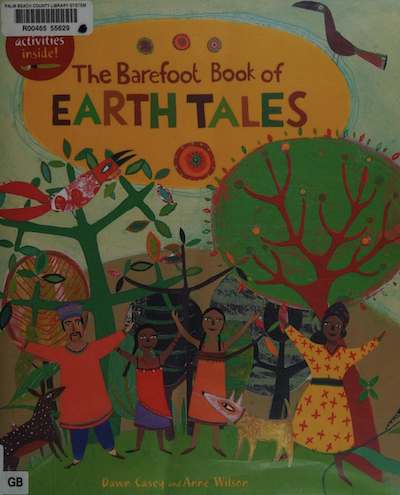
And I am pleased to say you can find lots more Barefoot books (yes, you can search by publisher as a field), all just a click away at the Internet Archive... and if you see something you like, maybe buy one for a young person in your life! I am such a fan of these books. Here are just a few titles:


Tropical Tales (by Ramouf Mama!)