Showing posts with label IAAW55. Show all posts

Friday, June 17, 2022

African Diaspora at Internet Archive: John Wesley Work

Today was so busy I wasn't sure if I would have time for a post today, but I really wanted to write about this amazing father-son team (I wrote about the Lomaxes, father and son - and daughter too! - earlier this week)... so, today's post is about John Wesley Work, Jr. and his son John Wesley Work III.

Here is John Wesley Work, Jr.'s book, published in 1915: Folk Song of the American Negro.


You can read more about John Wesley Work, Jr. at Wikipedia. Born in 1871 in Nashville, Tennessee, where his father was a choir director, John Wesley Work Jr. was the first African American collector of African American music. Prior to this book, he also published New Jubilee Songs as Sung by the Fisk Jubilee Singers in 1901 and New Jubilee Songs and Folk Songs of the American Negro in 1907, which was the first publication of the song "Go Tell It on the Mountain." (For me it is also a fascinating fact that he was a professor of Latin at Fish University!)

The book contains some beautiful photographs too, like this portrait of the original Fisk Jubilee Singers:


Then Work's son, John Wesley Work III, also became a musicologist; you will find this important book at the Internet Archive: American Negro Songs and Spirituals.


You can read more about John Wesley Work III at Wikipedia. In addition to his work collecting and studying African American folk songs, he was also a composer.

There is an introduction to the book describing the different genres of folk songs in the book, and each song (230 songs!) has both the lyrics and music:
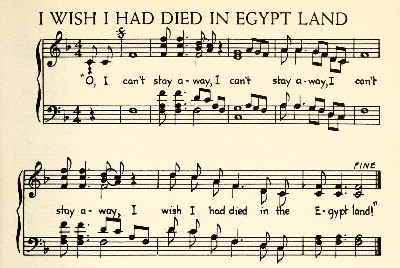

I've really enjoyed featuring different music books this week, and I am especially glad to finish up the week with this father-son team.


by John Wesley Work, Jr.


by John Wesley Work III


Thursday, June 16, 2022

African Diaspora at Internet Archive: Negro Folk Music USA.

Today's post for this week of musical books features a book by an author who will be familiar to readers of this blog: Harold Courlander! The book is Negro Folk Music USA.


The book is organized into the following chapters: The Setting ~ Negro Folk Music in the United States ~ Anthems and Spirituals as Oral Literature ~ Cries, Calls, Whooping, and Hollering ~ Sounds of Work ~ Blues  ~ Ring Games and Playparty Songs ~ Louisiana Creole Songs ~ Performers' Corner: Ballads and Minstrelsy ~ Dances: Calindas, Buzzard Lopes, and Reels ~ Instruments: Drums, Gutbuckets, and Horns.

Courlander's own research specialty was ethnomusicology (you can read more about him at Wikipedia), and you will so many songs in this book, some with music, some just with the lyrics. Here's Lord, My Worry.


In addition, there is also a biography of Courlander by Nina Jaffe that you can find at the Internet Archive: A Voice for the People: The Life and Work of Harold Courlander.


And for  a great survey of African American music, his book is just a click away at the Internet Archive!

by Harold Courlander


Wednesday, June 15, 2022

African Diaspora at Internet Archive: Natalie Curtis Burlin

It looks like this week is turning out to be a week of African American music, so I want to turn back to an important American musicologist who worked on both African and African American music, Natalie Curtis Burlin, and her book, Negro Folk-Songs: The Hampton Series, published in 1918 and 1919. 


This Dover edition combines the series of four small books into a single volume, paginated accordingly, but there is not a new introduction; it's just the contents of the books as Burlin published them, and the introduction to Hampton and to her work there is as she wrote it. Books 1-2 have 8 spirituals, while Books 3-4 have 8 secular songs. Each song has detailed notes and music for a quartet performance:


It was during her work at Hampton that Burlin met two African students there, C. Kamba Simango, and Madikane Čele, and they wrote a book together: Songs and Tales from the Dark Continent which was published in 1920. The Zulu songs and stories come from Madikane Čele, and the Ndau songs, stories, and proverbs come from C. Kamba Simango. 


I included some of the song-stories from that book in the anthology of stories in The Reader's Guide to African Folktales at the Internet Archive!, here's "How the Animals Dug Their Well."


So, while these books are very dated and reflect many prejudices of their times, Burlin's work is still valuable; in her time, she was an important defender of both African and African American culture generally and of musical culture in particular. You can find out more about her life and career at Wikipedia. She was killed in a car accident in 1921, shortly after completing these two books; she was only 46 years old.

by Natalie Curtis Burlin


Tuesday, June 14, 2022

African Diaspora at Internet Archive: The Lomaxes

Since I wrote about Alan Lomax's sister, Bess Lomax Hawes, in yesterday's post, I wanted to follow up today with a book that Bess Lomax Hawes and Alan Lomax wrote together with Jacob Delworth Elder (an anthropologist from Tobago): Brown Girl in the Ring : an Anthology of Some Games From the Eastern Caribbean.


For each of the song games in the book, there is information about the cultural context along with details about how the game is played, plus the music and lyrics:


I also wanted to share a foundational collection by Alan Lomax and his father John Lomax: American Ballads and Folk Songs, first published in 1934, which is full of African American songs.


There are specifically African American sections, like "Negro Bad Men," "The Blues," "Negro Spirituals," and "Creole Negroes." Some of the thematic sections also contain African American songs; you'll find "John Henry" in the "Working on the Railroad" section which opens the book for example, and "Foller de Drinkin' Gou'd" is included in the "Reels."

For each song, there is the tune transcribed, plus notes about the songs too; for example, here's Foller de Drinkin' Gou'd.


You can find out more about both John Lomax and Alan Lomax at Wikipedia; John Lomax, Jr. was also a folklorist and performer. You can also listen to many of the songs that Alan Lomax recorded over his decades of research (beginning with the work he did with his father) at the Alan Lomax Digital Archive,

Alan Lomax is also the author of this book about the blues: The Land Where the Blues Began.


Finally, I wanted to mention a fascinating article published by John Lomax in the Journal of American Folklore in 1913: Stories of an African Prince: Yoruba Tales. Lomax was collecting songs and stories from students at the State Normal and Industrial School for Negroes, at Prairie View, Texas (now Prairie View A&M University), and there he  met Lattevi Ajaji, a Yoruba man from Lagos, Nigeria, who told the 16 stories you can read in the article: The Elephant and the Rooster ~ The Election of the King of Animal ~ The Man and the Rabbit ~ The Gorilla and the Mother ~ The Man and His Pigs ~ The Bear and the Fox ~ The Two Roosters ~ The Fox and the Bird ~ The Man and the Ghosts ~ The Ass and the Driver ~ The Rabbit and the Fox ~ The Fly and the Ant ~ The Devil and His Friend ~ The Twins ~ The Famine and the Spider ~ A King and His Daughter.


So, thanks to John Lomax and later Bess Lomax and Alan Lomax, so much of African American musical tradition was recorded and carried forward, waiting for you now, just a click away at the Internet Archive.


by Alan Lomax, J. D. Elder, and Bess Lomax Hawe


by John Lomax and Alan Lomax


by Alan Lomax


Monday, June 13, 2022

African Diaspora at Internet Archive: Games, Plays, Songs and Stories

Since I did proverbs (from Jamaica!) yesterday, I thought I would carry on today with some other fun folklore genres, starting with Step It Down: Games, Plays, Songs and Stories from the Afro-American Heritage by Bessie Jones and Bess Lomax Hawes.


Bessie Jones (1902-1984) grew up in Georgia, and her recollections form the basis for the book. The editor, Bess Lomax Hawes, was an American folklorist and musicologist, and the sister of Alan Lomax; it was her brother who first put her in touch with Bessie Jones. You can read more about both Bess Lomax Hawes and Alan Lomax at Wikipedia.

The other two books I want to feature are by the remarkable Thomas Talley, the son of former slaves, botn in 1870 in Shelbyville, Tennessee, went on to become  a professor of chemistry at Fisk University in Nashville, and he was also a collector of African American folksongs. He was the author of two important books: Negro Folk Rhymes (Wise and Otherwise) and The Negro Traditions.

The book Negro Folk Rhymes was published in 1922, and Talley collected the words to over 300 songs and published them in this book, the first collection of African American songs toe published by an African American scholar.


The Negro Traditions. was published in 1993 , featuring previously unpublished folklore research by Talley, with a wide range of folktales and folk beliefs. 


Here is a list of the chapters: De Wull-er-de-Wust (Will o' the Wisp) ~ Cotton-eyed Joe orThe Origin of the Weeping Willow ~ Why the Jaybird Goes to See the "Bad Man" on Friday ~ The Headless Man ~ Why the Buzzard Is Black ~ The Negro Slave in the Moon ~ How the Bear Lost His Judgeship ~ Why the Irishman 1s a Railroad Section Boss ~ Why the Preacher Dresses in Black ~ The Parrot Overseer ~ The Courting Old Woman ~ Why the Cat and the Dog Are Enemies ~ Origin of the Dog's Habits ~ The Devil's Daughters or Why the Fish Have Fins ~ Why White Overseers of Negro Slaves Had Little Sense ~ Riddle Them Right.

I'll be back tomorrow with some books following up on Talley's work as a musicologist; spirituals and folksongs are some of the most powerful African American creative accomplishments!

Meanwhile, enjoy all three of today's books at the Internet Archive:


by Bessie Jones and Bess Lomax Hawes


by Thomas Talley


by Thomas Talley


Sunday, June 12, 2022

African Diaspora at Internet Archive: Jamaican Proverbs

I decided to start off this week not with folktales, but with proverbs. Specifically, three books of proverbs from Jamaica!

The oldest book of the three, published in 1910, is Jamaica Negro Proverbs by Izett Anderson and Frank Cundall.


The 737 proverbs are arranged alphabetically, with notes and comparative comments, for example:


One hundred years later is More Jamaica Old-Time Sayings by Edna Bennett, published in 2010.


The book contains 60 pages of Jamaican proverbs, along with some other Caribbean proverbs too. This book also contains some commentary on each proverb too, for example:


And last but definitely not least is this scholarly book: Jamaican Sayings with Notes on Folklore, Aesthetics, and Social Control by G. Llewellyn Watson, published in 1991.


This book is organized thematically, and of course I am most interested in the first chapter: animal proverbs! This book has a version in literary English of each proverb, plus the commentary:


So, just jump in: all three proverb books are just a click away at the Internet Archive.


by Izett Anderson and Frank Cundall